Kaleb Stoppel: Building a Visual Platform for a Speaker and Advocate
Kaleb Stoppel reached out after seeing keynote coverage I had posted on LinkedIn. We had known each other long before that, two kids from small towns who grew up playing sports against each other, and later reconnected as adults working in neighboring school buildings. His ask was larger and more intentional than what he had seen. That became clear quickly.
Kaleb spent years in educational leadership within the Olathe School District before surviving a school shooting that took place in his office. The direction of his professional life changed substantially after that. His work has shifted toward mental health advocacy, resilience, and public speaking, and his personal story became central to the mission itself. In advocacy work, the personal story is not background. It is the point.
What he had identified before reaching out was a gap that a lot of speakers face. The experience of hearing him in person did not have a meaningful equivalent online. There was no visual record capable of carrying the emotional weight of the experience itself. That becomes a problem when you want your message to reach people who were never present for the keynote.
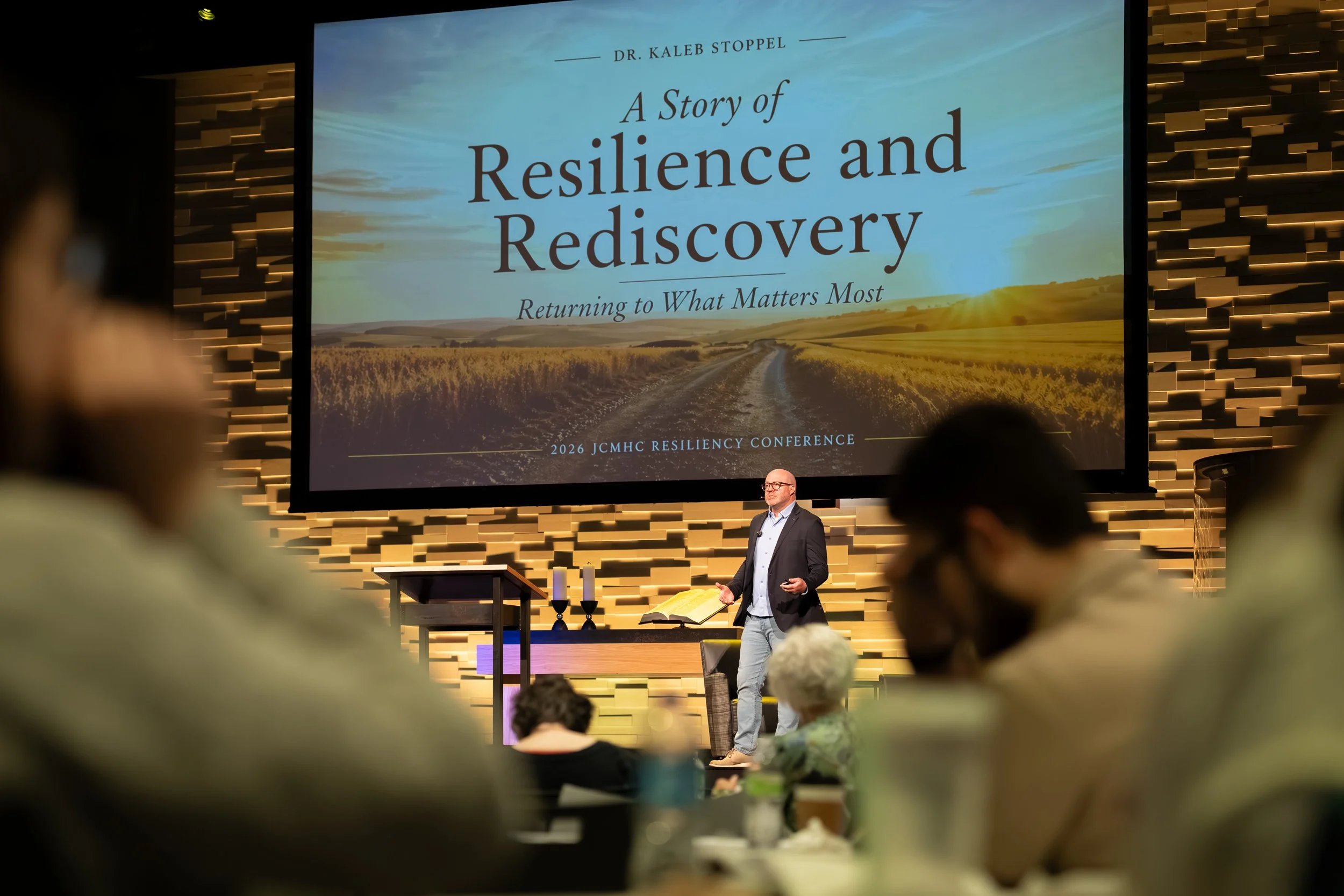
Beyond Documentation
The initial request was photography, video coverage, and a clean recording of the full keynote. What became apparent in planning was that documentation alone would not solve the underlying problem. The challenge was figuring out how to translate a live experience into something that could continue existing meaningfully once the audience left.
Kaleb's presentations are not built around structured talking points or slides. They are rooted in storytelling and human connection, and the most important moments often happen when he moves away from the original plan and responds directly to the room. Pacing, silence, vulnerability, and humor are all part of how the work lands. None of that transfers automatically into a photograph or a short clip. It has to be built deliberately into how the project is approached from the beginning.
That meant thinking about the full arc of what would be needed before a single frame was captured. The keynote recording, the audio, the still photography, the environmental coverage, and the downstream editing decisions all had to be considered as a connected system rather than separate deliverables.
The Site Visit
The day before the conference I went to the auditorium alone. The goal was to understand the environment before it mattered.
Stage lighting is designed to look good in person. It is sometimes meant to be dramatic. It rarely photographs or records well, and it almost never does so consistently. Moving from one part of the stage to another, the color temperature shifted noticeably. In some positions it read bluish purple on skin. In others, heavily yellow. Exposure varied across the stage as well. Without a plan going in, that kind of inconsistency becomes a significant problem in post.
The site visit allowed me to test focal lengths and identify where the locked-off camera needed to be positioned. It also gave me something practical to give Kaleb: once I understood the camera position and framing, I could give him landmarks on the stage. He is not a speaker who stands behind a podium. He moves, interacts, and responds to the audience. Knowing roughly where the boundaries of the frame were meant he could move freely without drifting out of the shot.
Knowing what the lighting was going to do also allowed me to make a deliberate decision going in. I shot everything in Kelvin rather than auto white balance. That gave me a consistent starting point across the entire day and made the color correction work in post more manageable and more uniform.
Working in the Room
A locked-off camera recorded the full keynote from the back of the auditorium while a separate audio feed ran directly from Kaleb's lapel throughout the presentation. While that was running, I moved throughout the space with a second camera covering still photography and motion simultaneously, including tighter shots of Kaleb on stage, audience reactions, registration, environmental details, and interactions before and after the keynote. That combination allowed the wide stage shot to be cut against tighter angles, audience moments, and the broader context of the day.
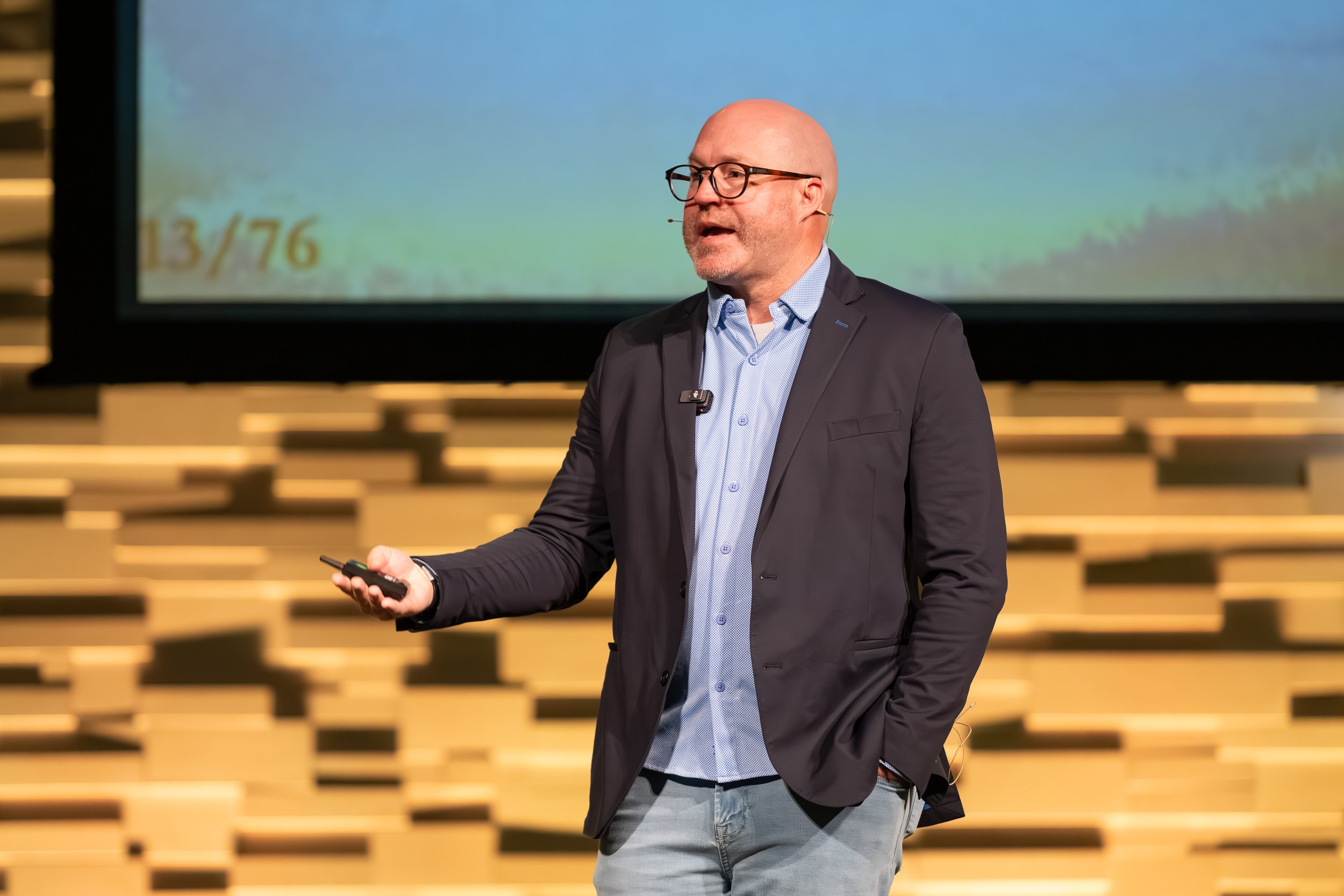
Kaleb is a calm speaker. His pacing is deliberate and conversational, which created a particular kind of attention in the room. The audience was not simply receiving information. They were settling into something. That quality is easy to lose if you are not paying attention to the rhythm of the space rather than just the stage.
There were moments of humor and direct audience interaction, but there were also extended stretches of quiet reflection as he walked the room through the events that permanently altered the direction of his life. The approach had to stay observational throughout. Direction would have broken what was happening.
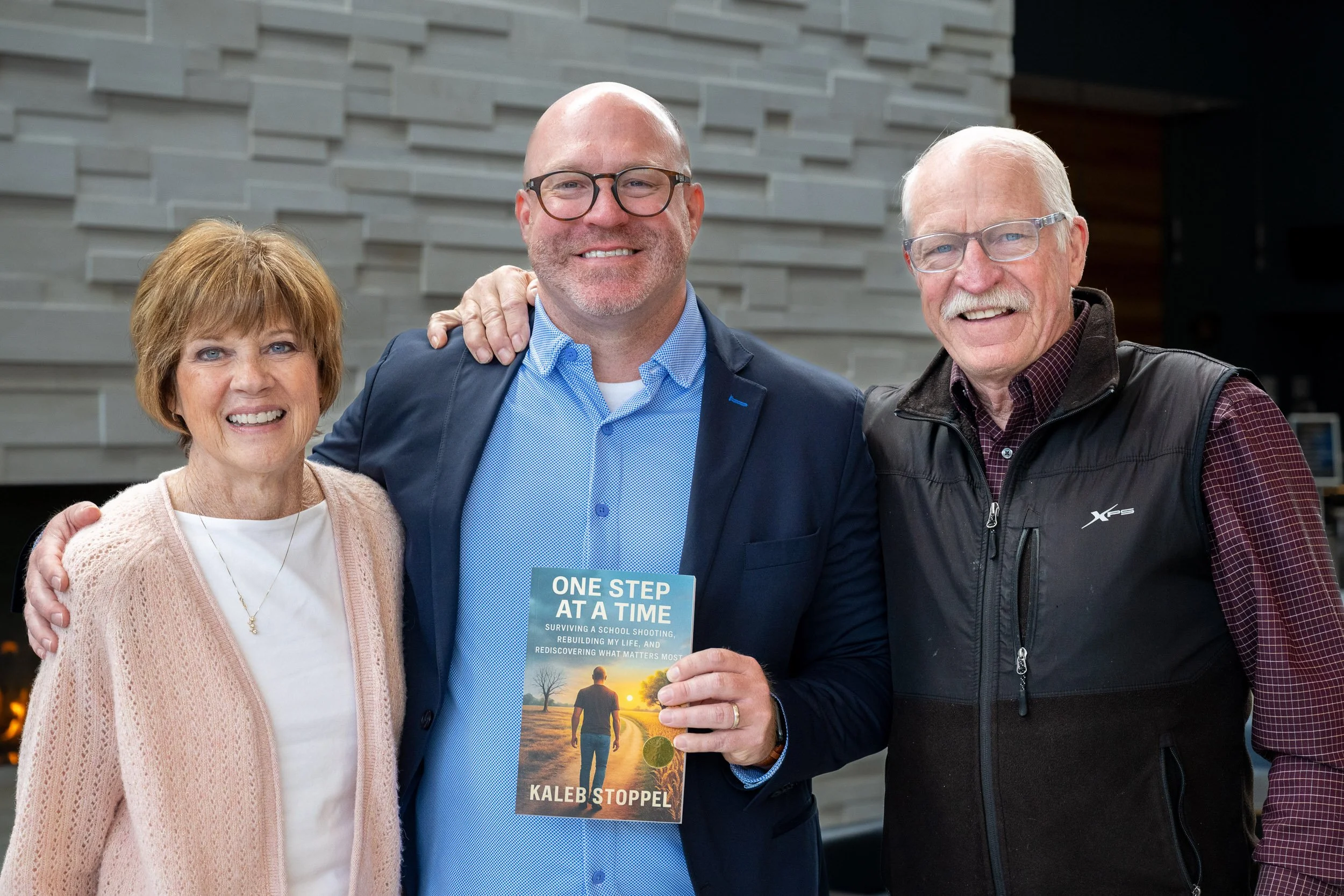
Kaleb’s parents were in the audience that day, listening as he recounted what happened. didn't know they were going to be in the audience until that day. Once the presentation ended, getting a photo of the three of them together became a non-negotiable.
The audience was not simply attending a keynote. They were processing something alongside him.
Balancing Observation and Structure
The goal was never to overproduce the experience or push it toward something cinematic. At the same time, the finished assets needed to function professionally across websites, speaking materials, social platforms, and future conference submissions. Emotional honesty and professional utility do not always pull in the same direction, and managing that balance shaped every decision made during the shoot.
Restraint was the more important discipline. The instinct in emotionally charged environments is often to lean into the weight of the moment visually. That approach tends to produce work that feels manufactured rather than true. The more useful instinct was to stay quiet, stay present, and trust that what was already happening was enough.
Building the Reel
The speaker reel was not part of the original scope. It developed once the footage, audio, still imagery, and environmental clips were assembled and the full body of material was visible.
The first task was finding the audio spine. A full keynote contains long arcs of pacing, reflection, and buildup that do not compress naturally into short-form communication. The school shooting is a central part of Kaleb's story, but it is not the whole of his message. The realizations that came from that experience are what his work is about, and that is what the reel needed to reflect. Building it around the shooting alone would have reduced him to a single moment rather than representing what he is actually communicating. Finding the right through line meant listening carefully and being patient with the material until the right spine emerged.
Once the audio foundation was in place, the work became matching b-roll to it. Gesture, emotion, and pacing in the visual material had to align with what was happening in the audio. The locked-off wide shot anchored the viewer in the auditorium. Tighter angles on Kaleb, audience reactions, and the broader footage of the day layered in the atmosphere and humanity of the experience. The goal was not to illustrate the audio. It was to make the speaker reel feel like the presentation.
What Changed
The photographs, video assets, and completed reel were integrated almost immediately into Kaleb's website, speaking outreach, social media, and future presentation materials. More importantly, the project established a clearer visual infrastructure around work that is deeply personal by nature.
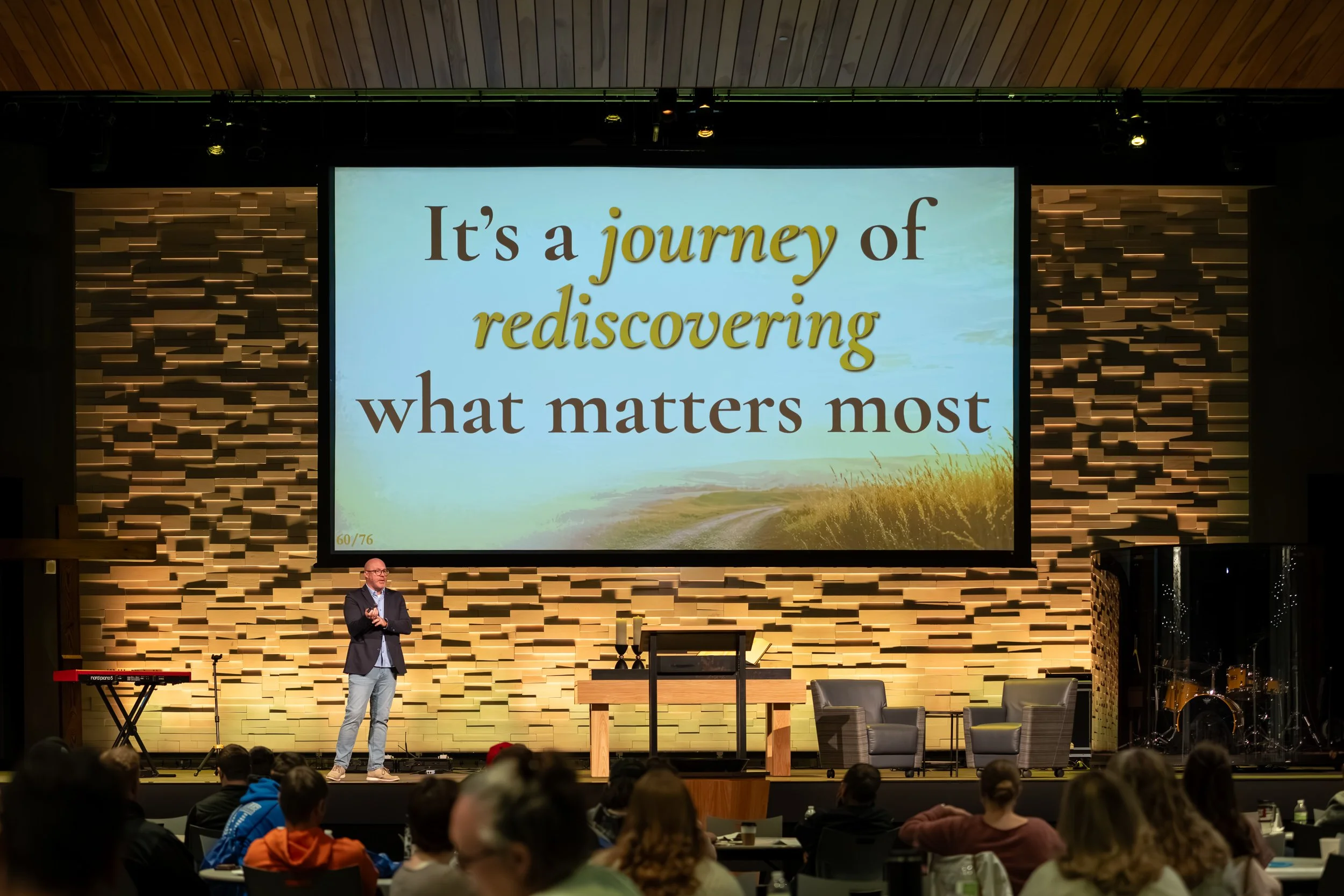
What Kaleb wanted was straightforward: he did not want people to feel they had to attend a live presentation in order to encounter his story or engage with his message. The finished material made that possible. The presentation no longer ended when the audience left the room.
A few days after delivery, Kaleb sent a message that stayed with me. "I've watched the highlight video of myself like a dozen times. You've really helped make this event a lasting memory for me and something that's really impactful to me now." He followed it with this: "Honestly, this has been so profound for me. I'm not sure I can even begin to articulate it accurately. Every time I go back and watch just the reel, I almost get emotional. I feel so proud and so grounded that this is the work I meant to do. It fills me up each day with enough to continue to move forward and give me the encouragement to keep telling my story."
A presentation without documentation ends the moment the audience leaves. What Kaleb has now is a body of work that continues reaching people, representing him accurately, and giving his message a place to live outside of the rooms he speaks in.