Field Notes: Overnight on the Platte River
Cranes, Cold, and Constraint
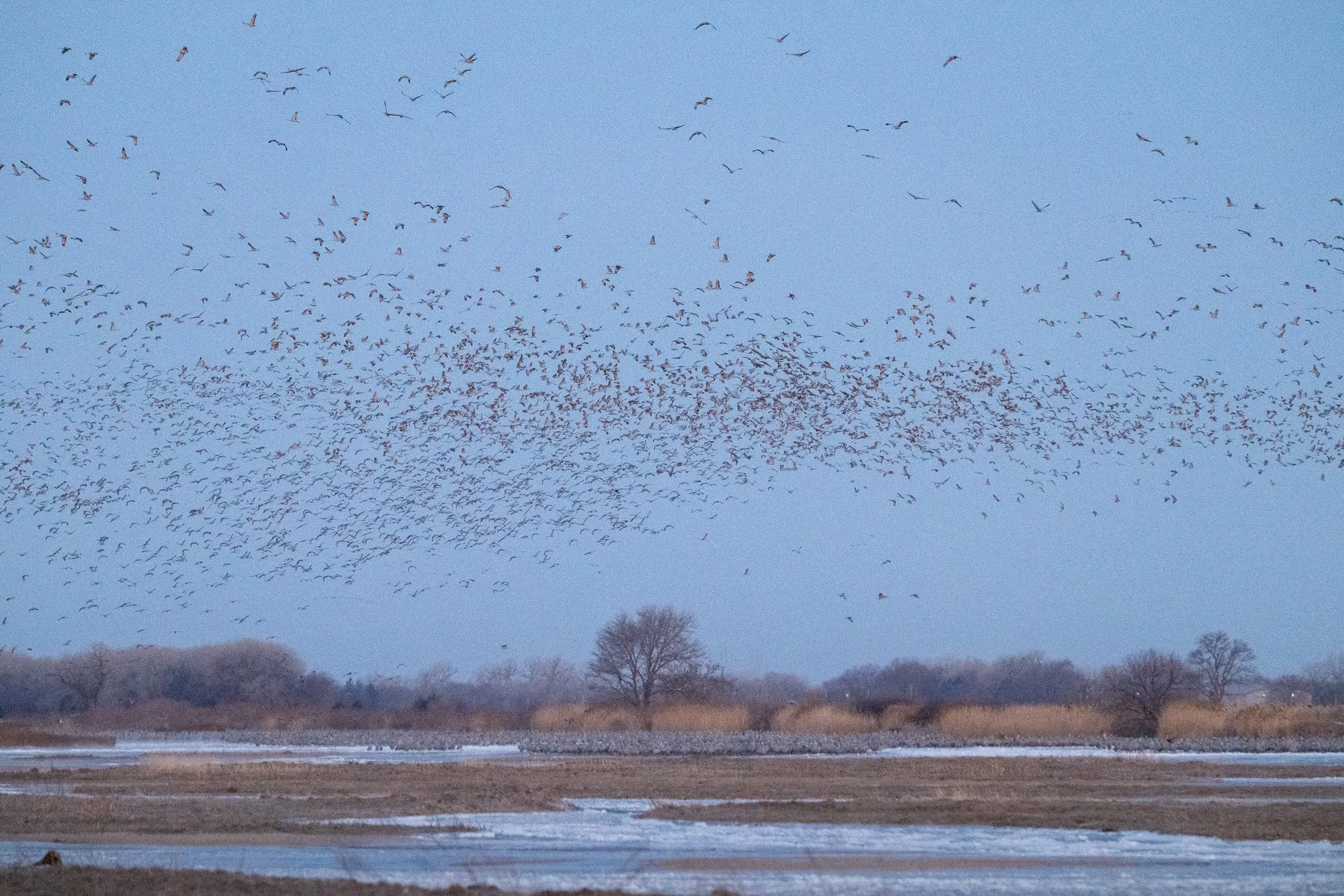
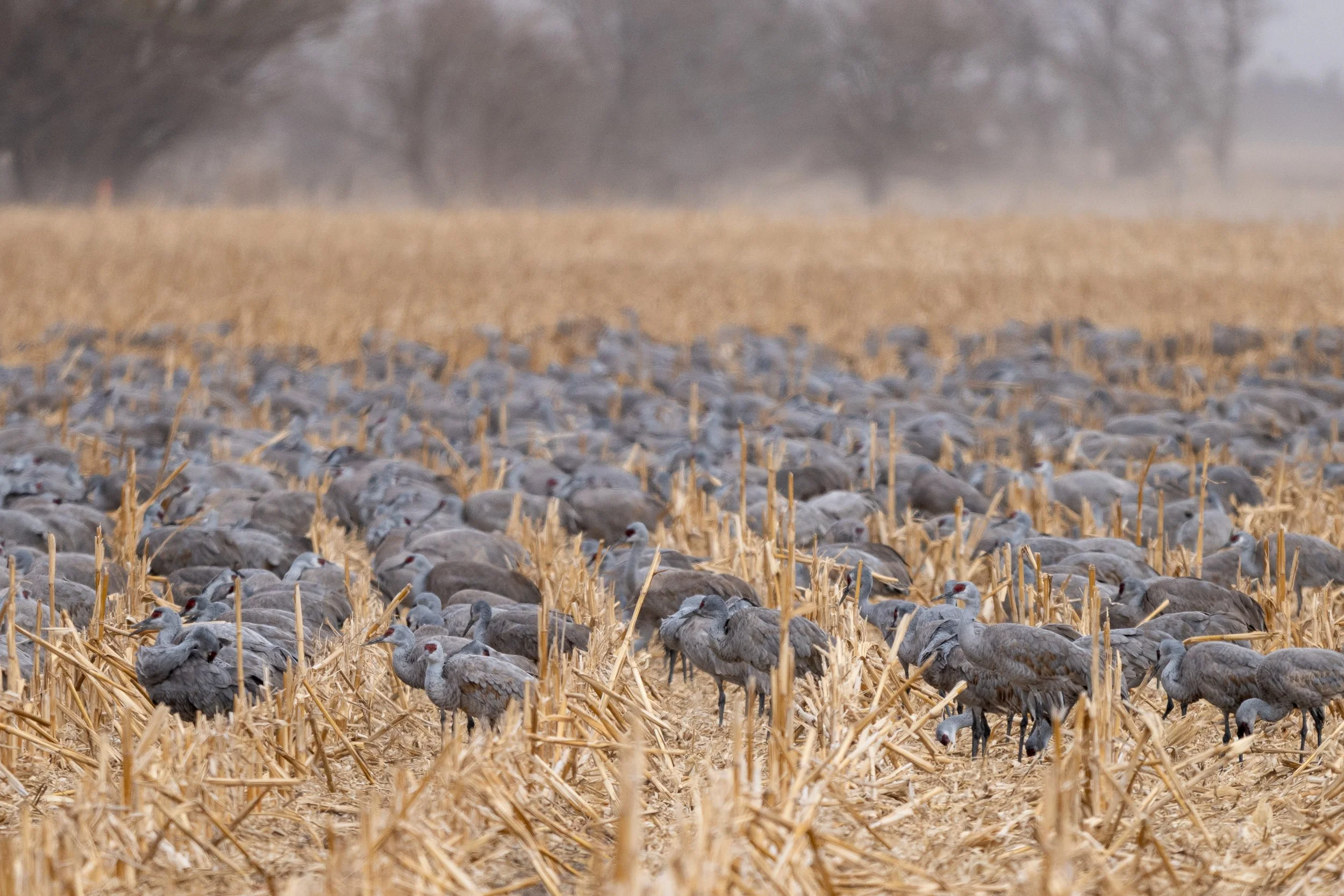
Each spring, along the Central Flyway, a migration corridor running through the middle of North America, more than a million sandhill cranes compress into a single stretch of river in central Nebraska. The conditions along this section of the river are specific. Wide, shallow channels provide a place to roost overnight, while the surrounding fields offer reliable food sources during the day. An immense concentration of cranes that arrives and leaves within a few weeks.
Getting close to the migration means spending the night in one of the photography blinds placed strategically along the river's edge. Several organizations manage blinds along this stretch, each with their own reservation systems. The blind I stayed in was managed through Rowe Sanctuary, an Audubon center near Kearney, reserved well in advance.. Availability is limited, and once a date is secured, the conditions associated with that date are part of the commitment. Arrival follows a set schedule. Visitors are transported to their assigned blinds along the river and remain there until they are retrieved the following morning. The system is designed to minimize disturbance and preserve natural behavior, but it also removes flexibility. Leaving before retrieval is not permitted. That is the first rule. Whatever happens, you experience it from that position.
Securing a blind requires planning. I booked a mid-March date during the first week of January, and slots were already going fast. By the time of arrival, the decision has already been made. There are no cancellations or rescheduling based on updated forecasts or changing conditions. The date holds, and the experience proceeds under whatever circumstances present themselves.
From Kansas City, the drive to central Nebraska takes approximately five hours. The distance itself is not exceptional, but it reinforces that this is not an incidental undertaking. The day before departure, the forecast shifted. A stretch of unseasonably warm weather gave way to a cold front moving across the region. By the time I crossed into Nebraska, visibility had dropped to near zero in a whiteout. At that point, the goal changed. The question was no longer what I might photograph, but whether I could persevere long enough to have the opportunity to capture anything at all.
Preparation followed the shifting forecast. The emphasis moved away from equipment and toward endurance. Staying warm was not optional, and it was not provided. The blinds are unheated, and once inside, you are responsible for managing staying warm yourself. Layering for sustained cold, maintaining a source of heat through the night, and planning for limited movement became the priority. The assumption was that if I could remain in place, the environment would eventually produce something to work with.
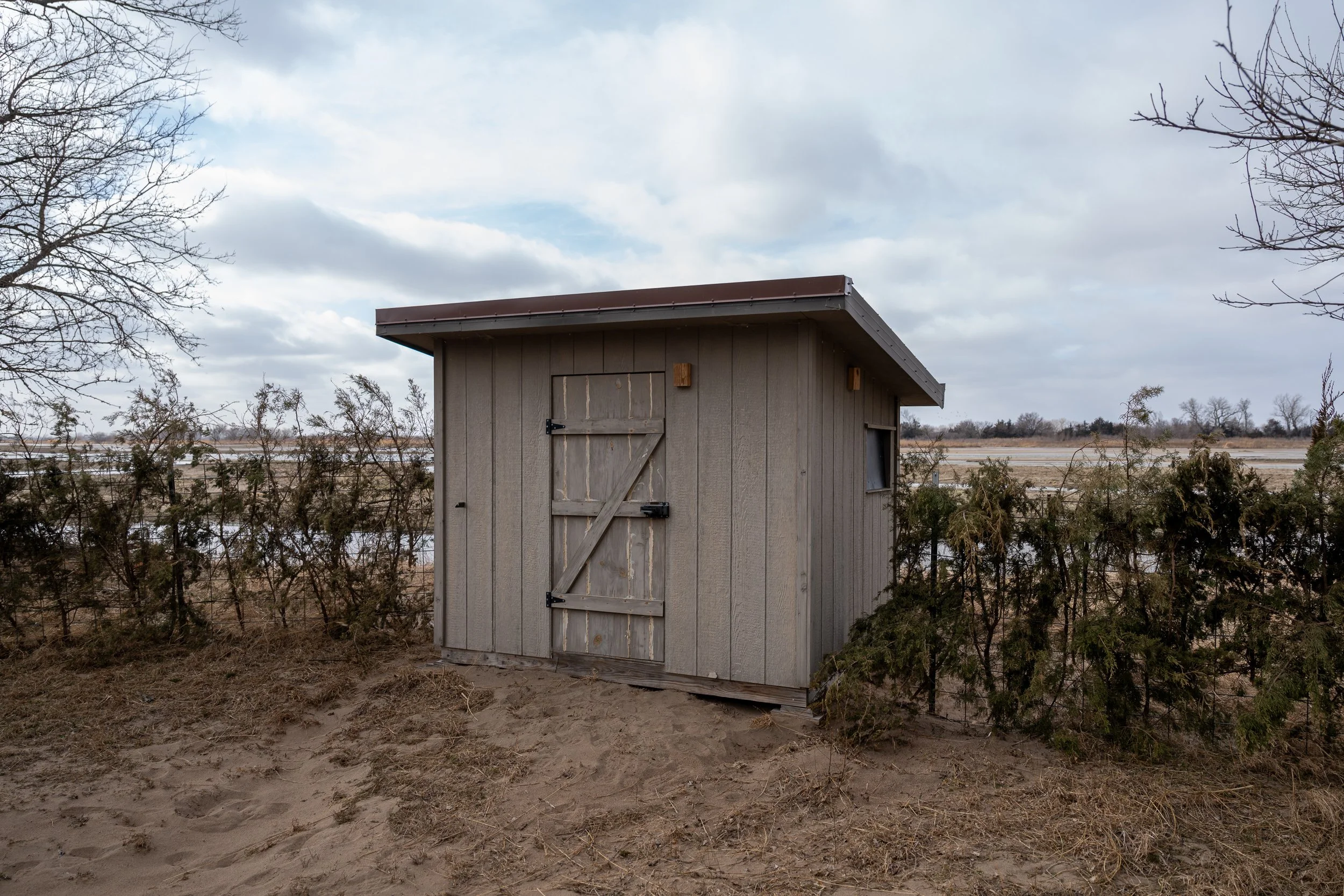
The blind itself was small and utilitarian, closer in character to a storage structure than to anything intended for comfort. There was room to sit, limited space to stand, and a series of openings oriented toward the river that defined the available lines of sight. Once inside, there is no leaving. There was no opportunity to move along the bank, adjust perspective, or step outside to reframe. Each image would be made within the constraints of those openings. It was just me, the cranes, and a compost toilet spending the hours together until a staffer came to get me the next morning.
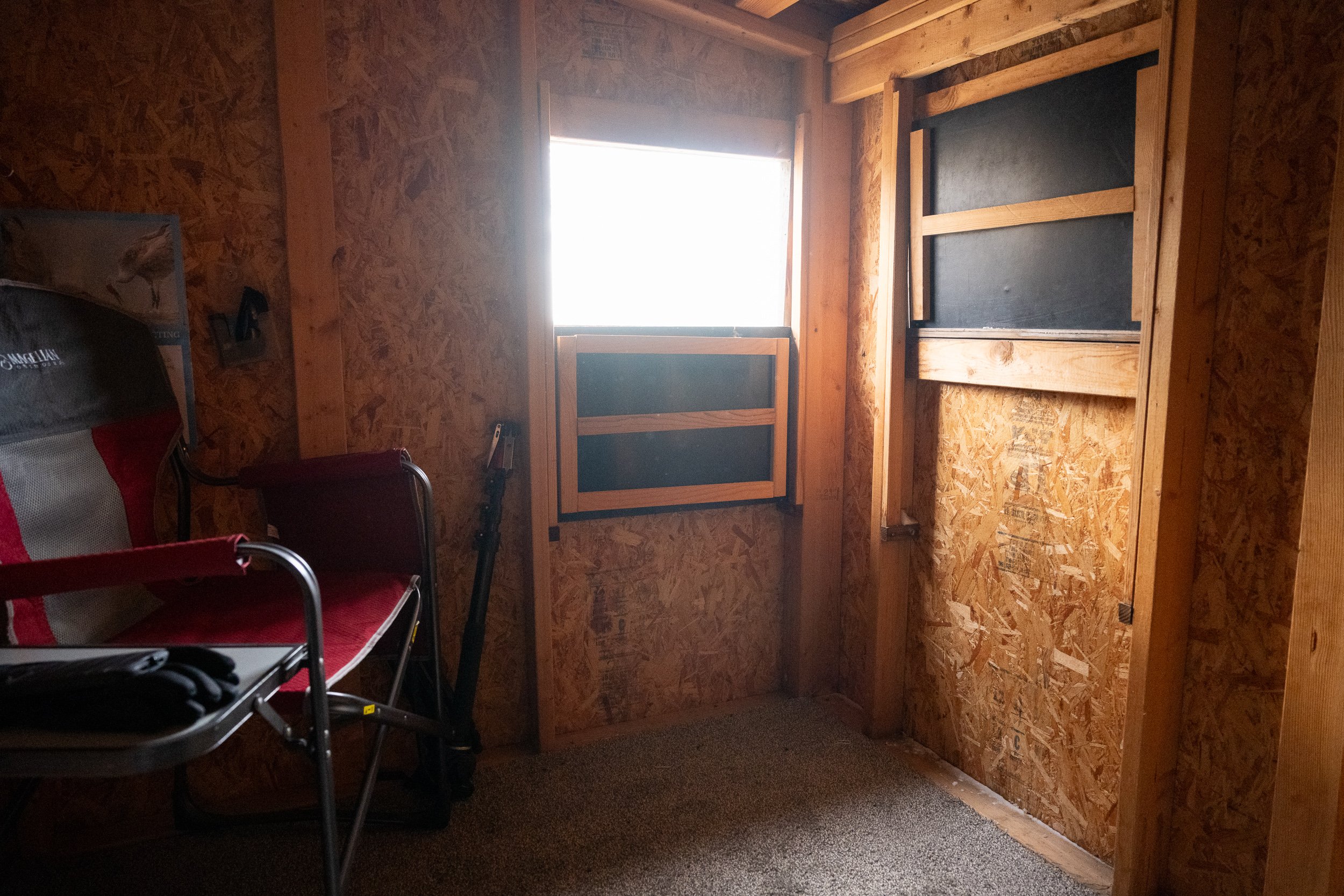
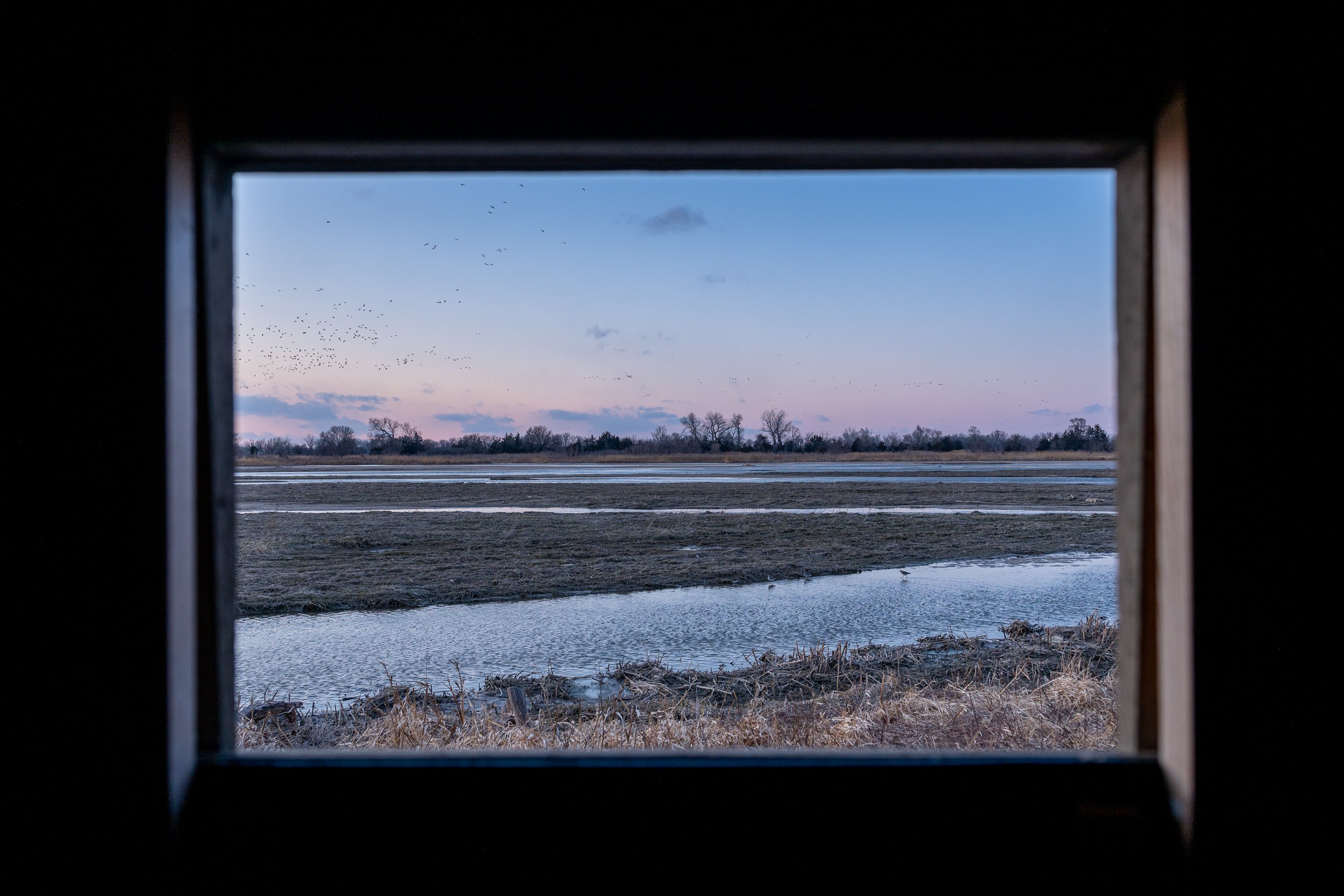
I settled in during the late afternoon while there was still light. A small number of birds moved along the river, but nothing that suggested what the following morning might bring. The time was useful for organizing the space. I placed equipment within reach, worked through how I would shift between positions in the dark, and evaluated what each opening offered. As the light faded, visible activity diminished. The river became visually still, though the cacophony of birds continued in the dark as they arrived in groups that could be heard but not seen. Occasionally a group would land nearby, visible only as movement in the dark before the sound of wings settled into silence.
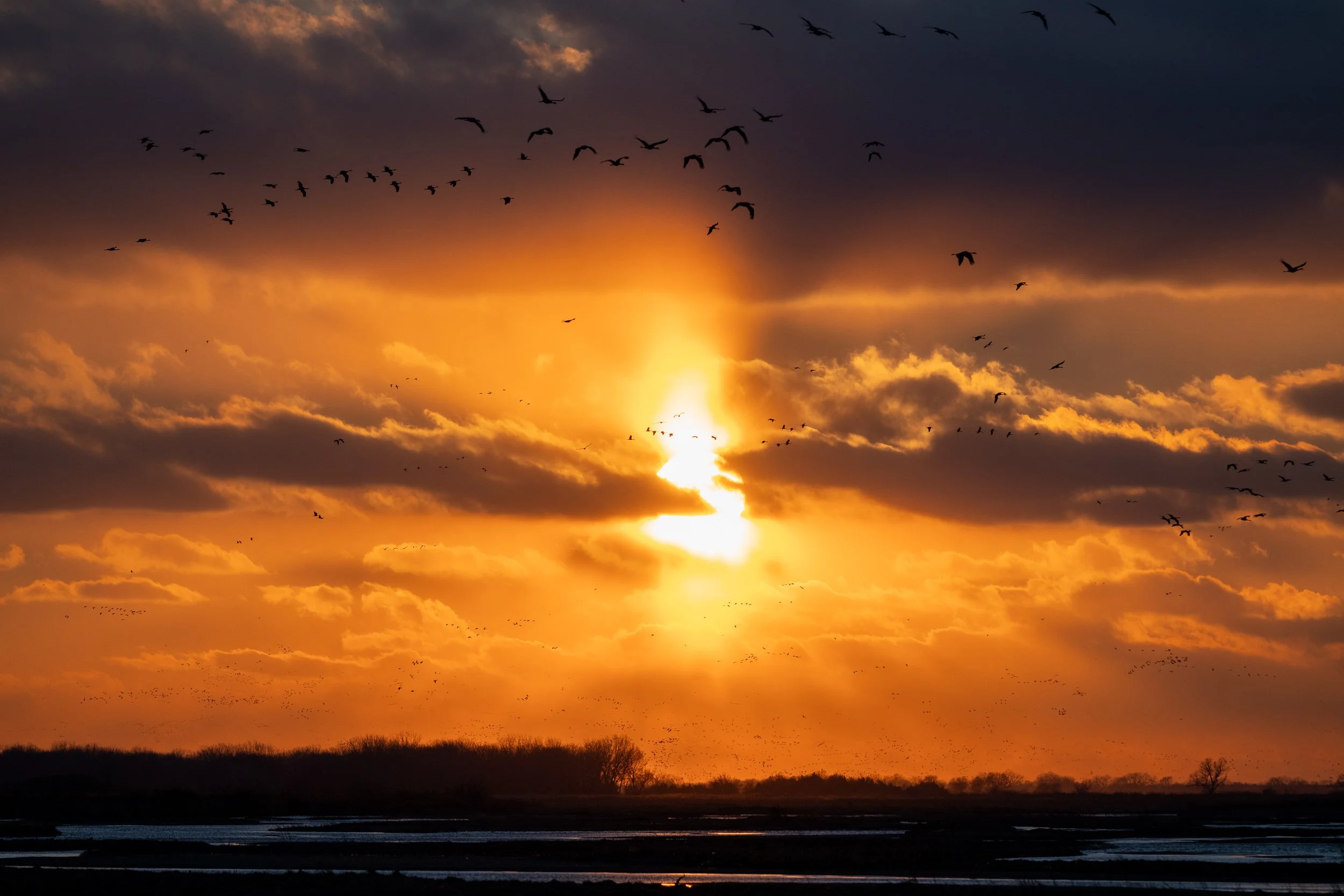
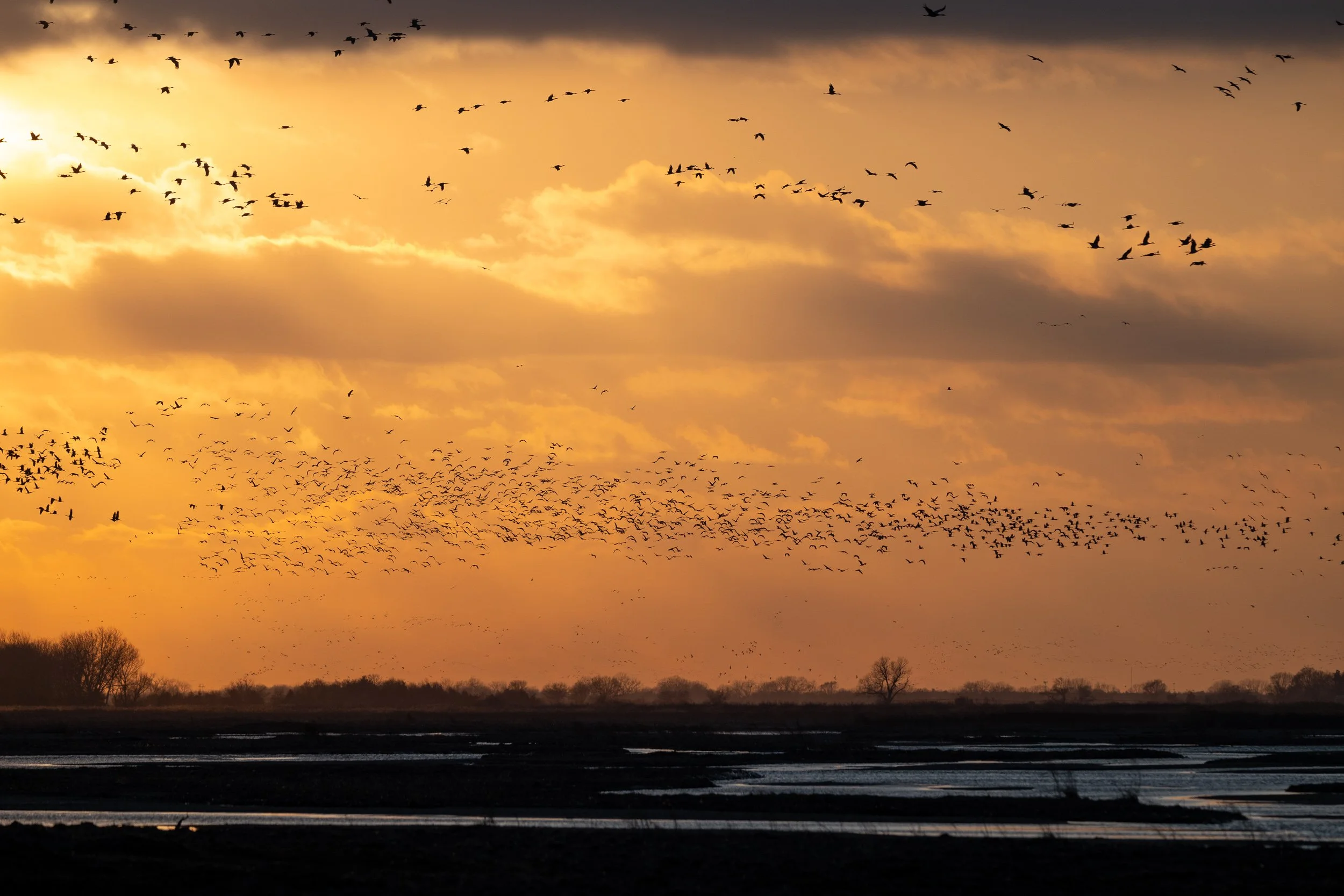
As the sun dropped, the light changed in a way I had not anticipated. The day had been overcast, the light even and diffuse. But near the horizon, the sun broke through the clouds. Through the west-facing window, looking down the river, the water caught fire. Deep orange and red light flooded across it, and tens of thousands of birds came through as dark shapes against that glow, backlit, wings catching the edge of that color. They were layered, one behind another, compressed into the space between me and the horizon. Small groups continued to arrive, passing through that light, their calls carrying across the water in waves. The intensity of it, the saturation of color, the sheer volume of birds moving through it, all of it lasted maybe twenty minutes. It was not what I had driven five hours for. It was better.
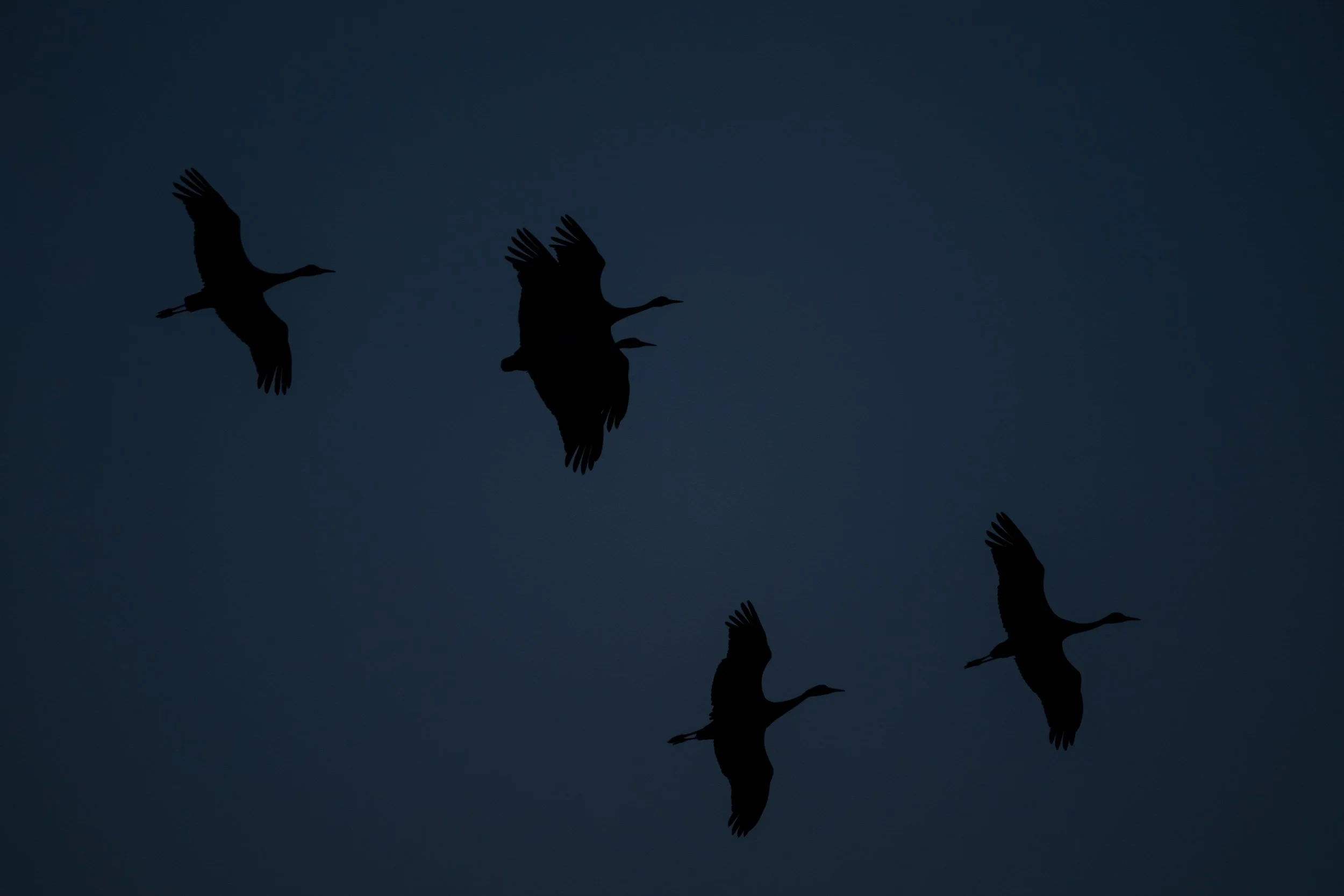
As the light faded, visible activity diminished. The sound did not. Birds continued to arrive through the dark, their calls carrying across the river and the steady rush of wings overhead as groups came in to land. The windows facing north opened directly toward the river, into the wind and into the birds themselves. I closed them and left them closed. Outside, it was effectively pitch black. The wind continued to push against the structure, and whatever was happening on the river could be heard, but not seen.
I eventually fell asleep. When I woke, I was cold. I'm not sure for how long I was out. I checked my phone. It was two in the morning, and the temperature was negative eight. I was shivering. I had to hold the phone with both hands, bracing it against my chest to keep it steady.
There is a specific kind of clarity that comes with being cold and alone in the dark. It has nothing to do with photography. I struggled to keep my hands and especially my feet warm, and the process was slow.
The wind had intensified, and the margin I believed I had built into my preparation was no longer there. I added layers, pulling on a heavier coat and a second set of gloves. The hand warmers did not activate on their own, it was too cold. I had to place them inside the glove liners, holding them against my hands until they were warm enough to begin working. Even then, it took time. The Audubon staff had provided a red light flashlight for use in the blind, but in the cold it failed to function. I was seated in a camp chair with a sleeping bag rated for zero degrees pulled up around my shoulders and head and I was freezing.
From that point forward, the night was defined less by anticipation of morning and more by managing exposure. Sleep occurred in short intervals. I would wake, adjust, generate what heat I could, and attempt to rest again. Time did not move evenly. There were stretches that felt prolonged and others that passed quickly, but there was no clear sense of progression, only a gradual movement toward first light.
By the time there was sufficient visibility to work, the environment had shifted again. The river that had been moving the evening before had frozen over. The birds were present, but they had concentrated along the far bank. With the wind coming out of the north, they held to that side of the river where the land and trees provided some protection. They were farther away than I would have liked, and the distance limited what I could do. Their behavior reflected the same cold and wind I was experiencing. The birds were cold too.
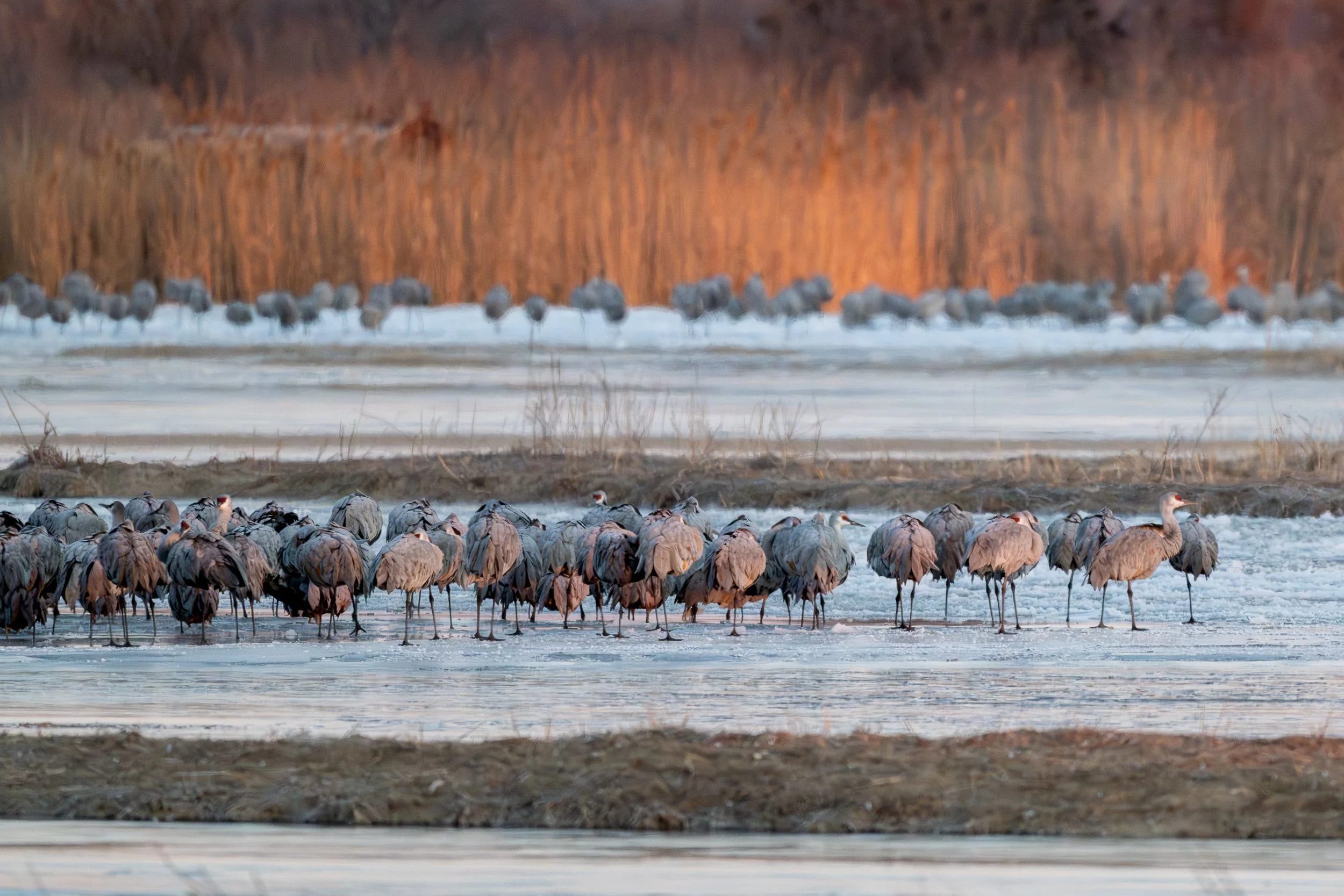
The wind was coming directly out of the north, aligned with the direction of the birds. Opening the windows meant allowing that air directly into the blind. Early on, I would open them briefly, check the light, make a few test frames, and close them again. Once there was enough light to work, they stayed open. From that point forward, the cold was constant, and there was no separating the conditions outside from the work inside.
Positioning became a matter of negotiation within constraint. I worked primarily on my knees to align with the openings, shifting between them as light and activity changed along the river. No single position provided a complete view. Each opening revealed a portion of the scene, but never the whole.
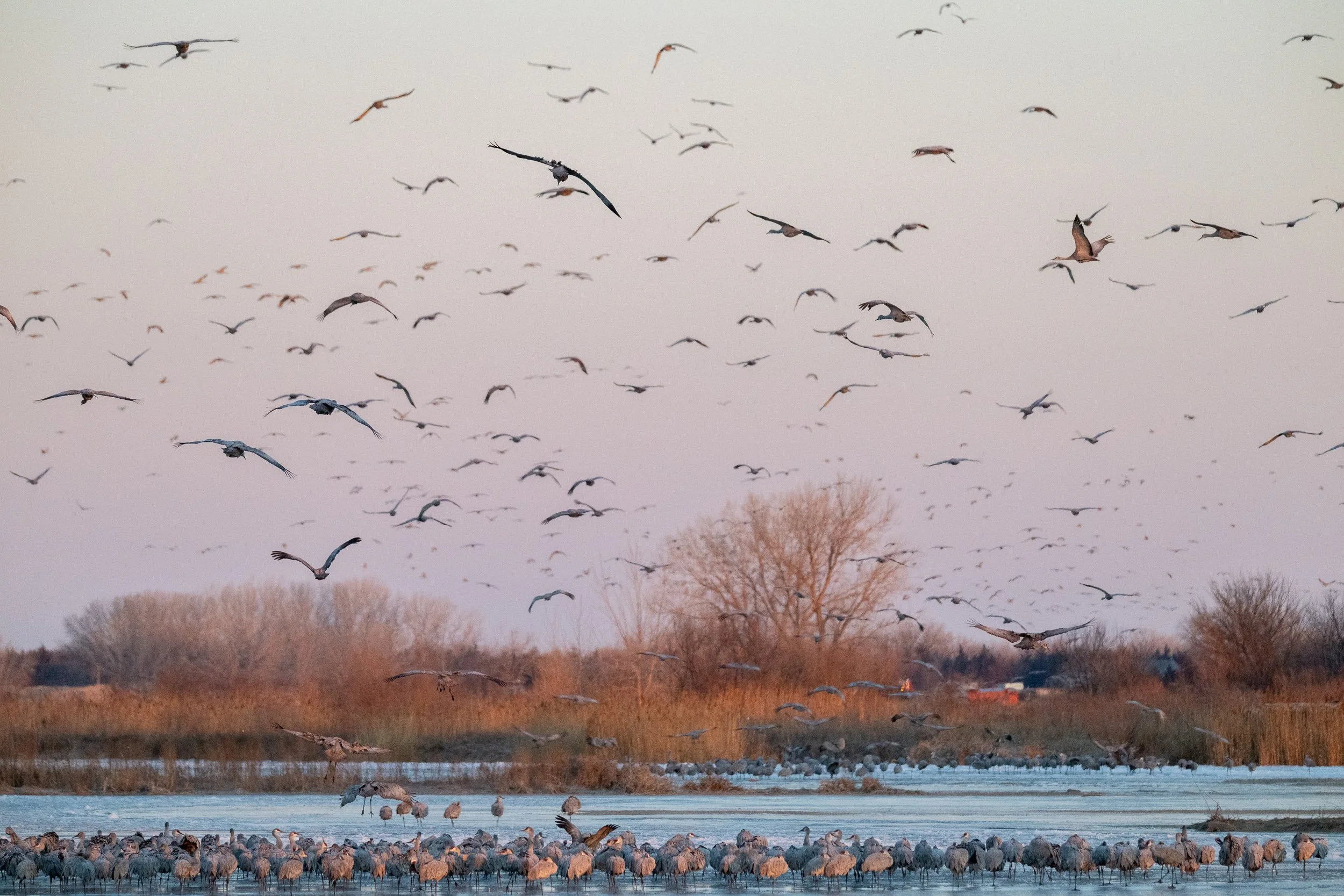
There was no single moment when the birds took flight en masse. Small groups moved, lifted briefly, and settled again. Larger flocks arrived from elsewhere, and each time I anticipated their arrival would trigger a mass liftoff from the ice. I was able to capture occasional lift offs from smaller groups but the large gathering of cranes never took off. Instead, all the birds in the air descended and joined the birds already on the ice. The huddle only grew larger.
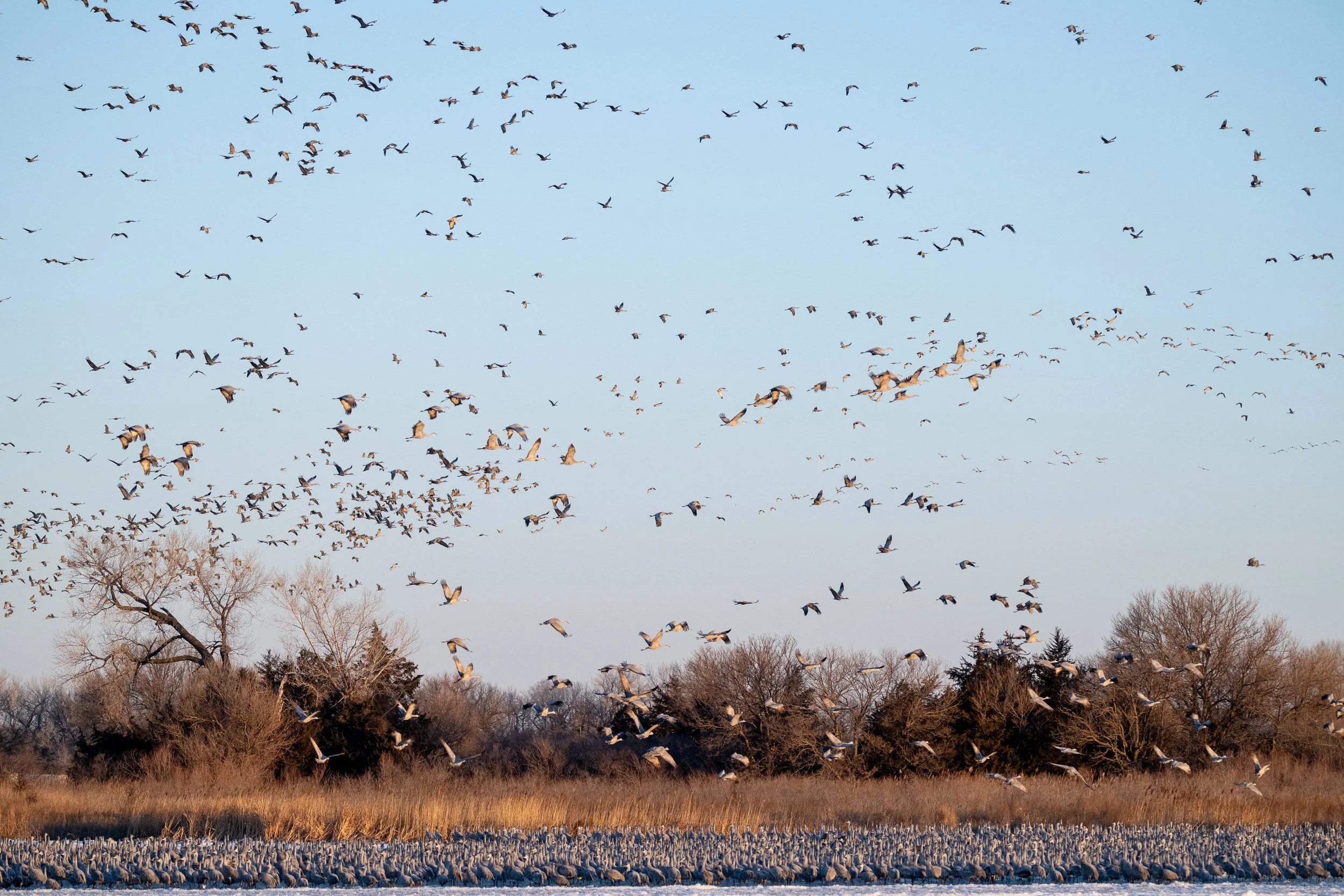
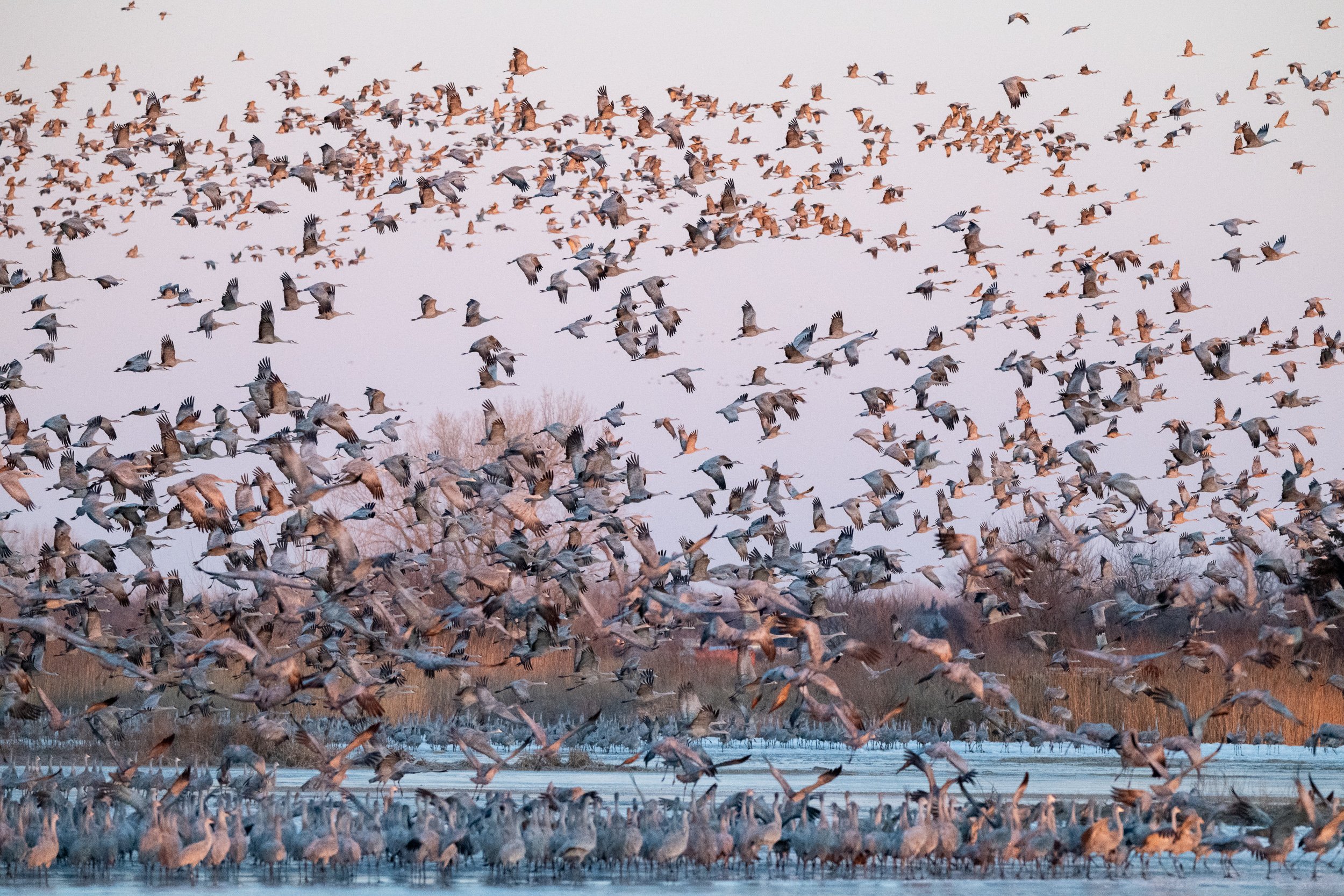
At a certain point, the work was complete. Not finished. Complete. When the staff came to retrieve me later that morning, I was ready to be warm again. The decision required no hesitation.
Inside the center, the transition was immediate. Warmth reestablished itself quickly. The drive home was uneventful.
All the variables I could control had been accounted for. The planning, the travel, the preparation, the night itself. I had done all I could do.
Preparation determines whether you are present for the moment. It does not determine whether the moment arrives.
The moment I came for never arrived. The one I did not expect had come the evening before, burning across the water for twenty minutes before the light was gone.