Washburn Rural North Middle School: A Strong Start
Creating clarity for students, parents, and staff before day one.
The Starting Point
This project didn’t come from a cold inquiry or a marketing push. It came from a relationship.
Dr. Charles Stoltenberg and I were in the same doctoral cohort, and this year he stepped into the role of opening a brand new middle school. Anyone who has worked in education understands what that entails. A new building is only part of it. What you are really building is a system. Routines, expectations, movement, communication. All of it has to come together at once. I spent fifteen years in public education as a history teacher and school administrator before transitioning to photography. That background shapes how I see these environments.
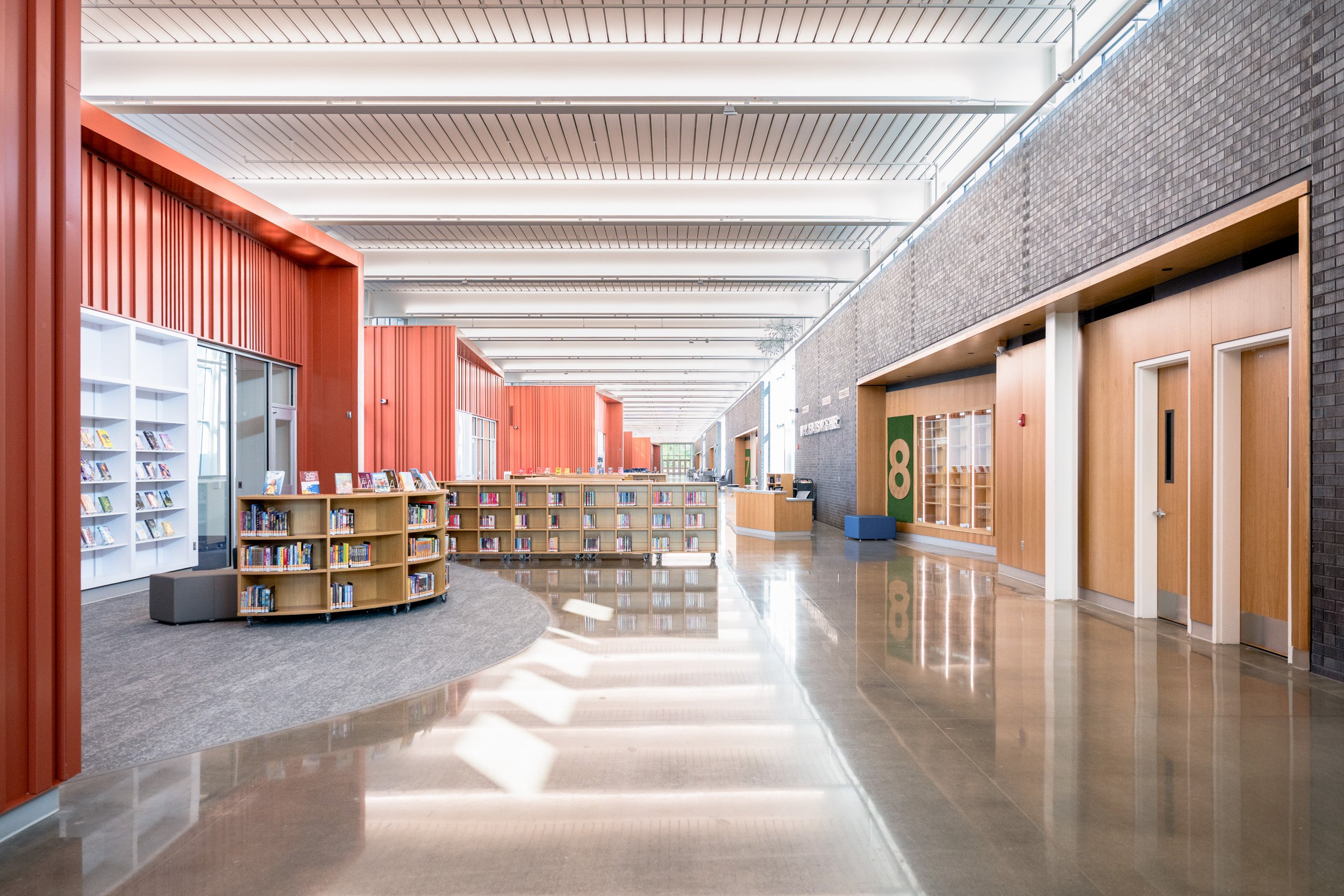
Before the school year began, I came in to photograph the building while it was still empty. The goal was not to create a polished architectural portfolio. It was to give the school something useful. A set of images that could help introduce the building to students, parents, and staff in a way that made it easier to understand.
In a brand new space, confusion shows up quickly if you do not get ahead of it.
Reducing Friction Before Day One
The most valuable work in this project was not the still photography. It was helping the school communicate how things would actually work before anyone showed up.
Aerial footage of the parking lot made it possible to clearly show traffic flow and drop-off procedures ahead of the school year. Parents could see where to go, how the system worked, and what to expect before ever pulling into the lot.
That level of clarity changes how a place functions. It saves time, reduces stress, and prevents problems before they arise. It is not flashy, but it directly impacts how smoothly day one unfolds.
Showing the Building Clearly
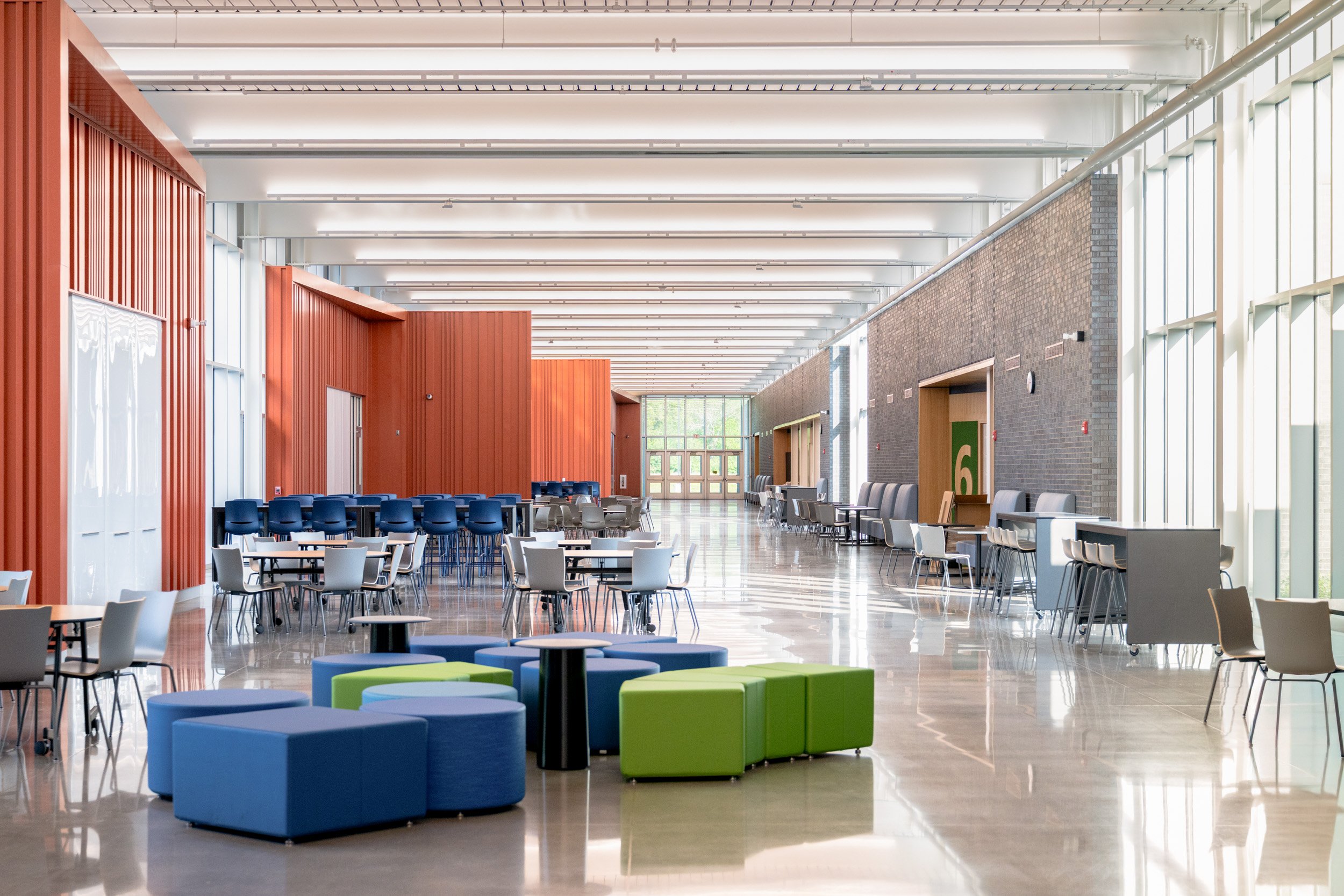
When people enter an unfamiliar environment, they are trying to orient themselves immediately. Where do I go? How does this space work? What does my day look like here?
These images were designed to answer those questions before anyone stepped inside. Wide, intentional photographs show how the building is laid out, how spaces connect, and how movement flows from one area to another. Hallways, commons areas, shared spaces, all photographed in a way that makes them easy to read.
These are not dramatic images. They are legible. They allow the people using the building to understand it quickly.
A student can begin to picture their day. A parent can feel more at ease. Staff can communicate expectations without explaining everything from scratch. It reduces friction before the first bell ever rings.
How the School Functions
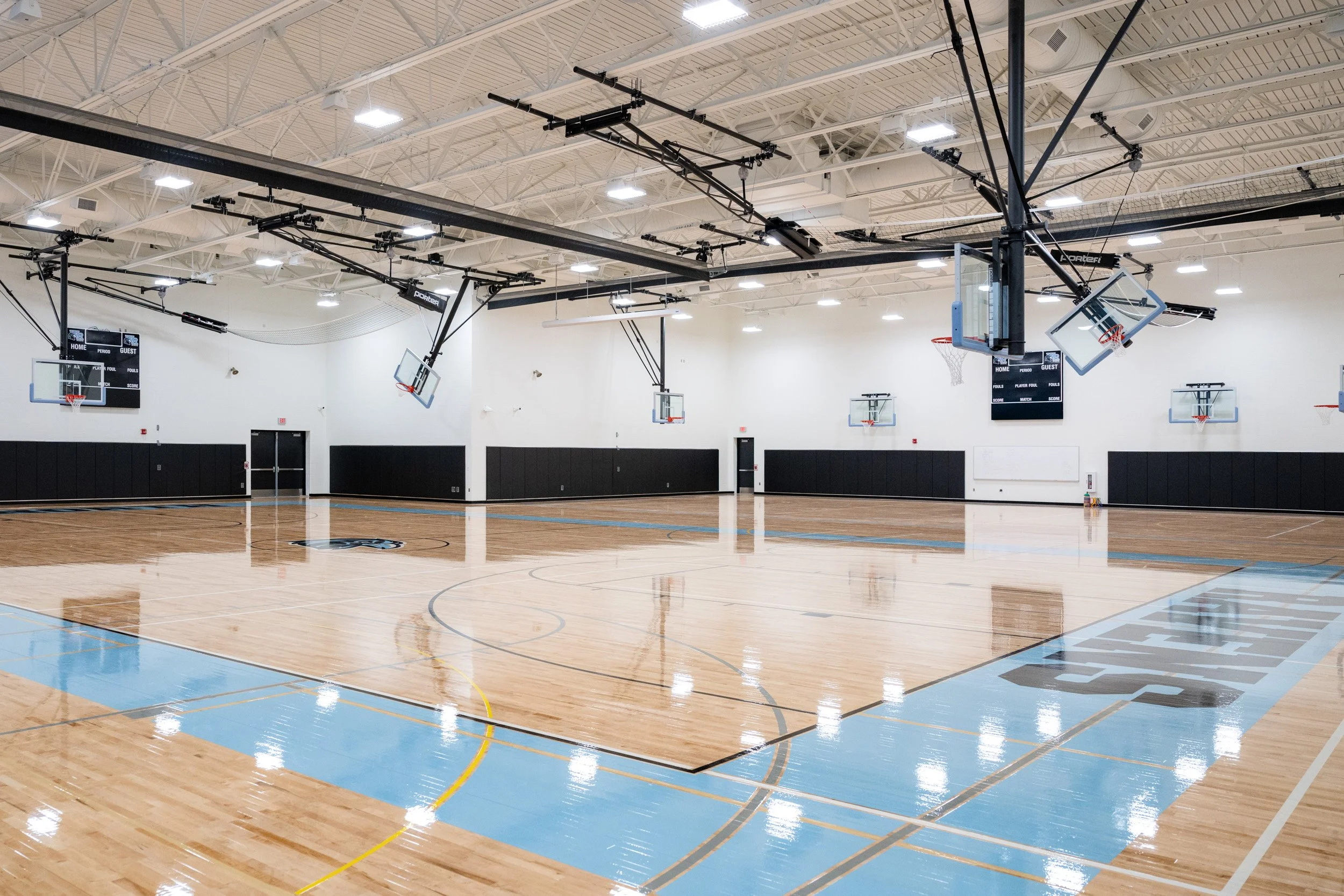
Understanding the layout is only part of it. People also need to understand how the building operates.
Spaces like the gym and common areas carry a different kind of weight. These are high-traffic environments where structure matters, where movement needs to be predictable, and where a lack of clarity turns into chaos quickly.
Photographing these spaces clearly gives the school something practical to use when explaining how things work. It turns instructions into something visual. Something people can follow.
That becomes especially important at the start of the year, when everyone is learning the system at the same time.
Identity Inside the Building
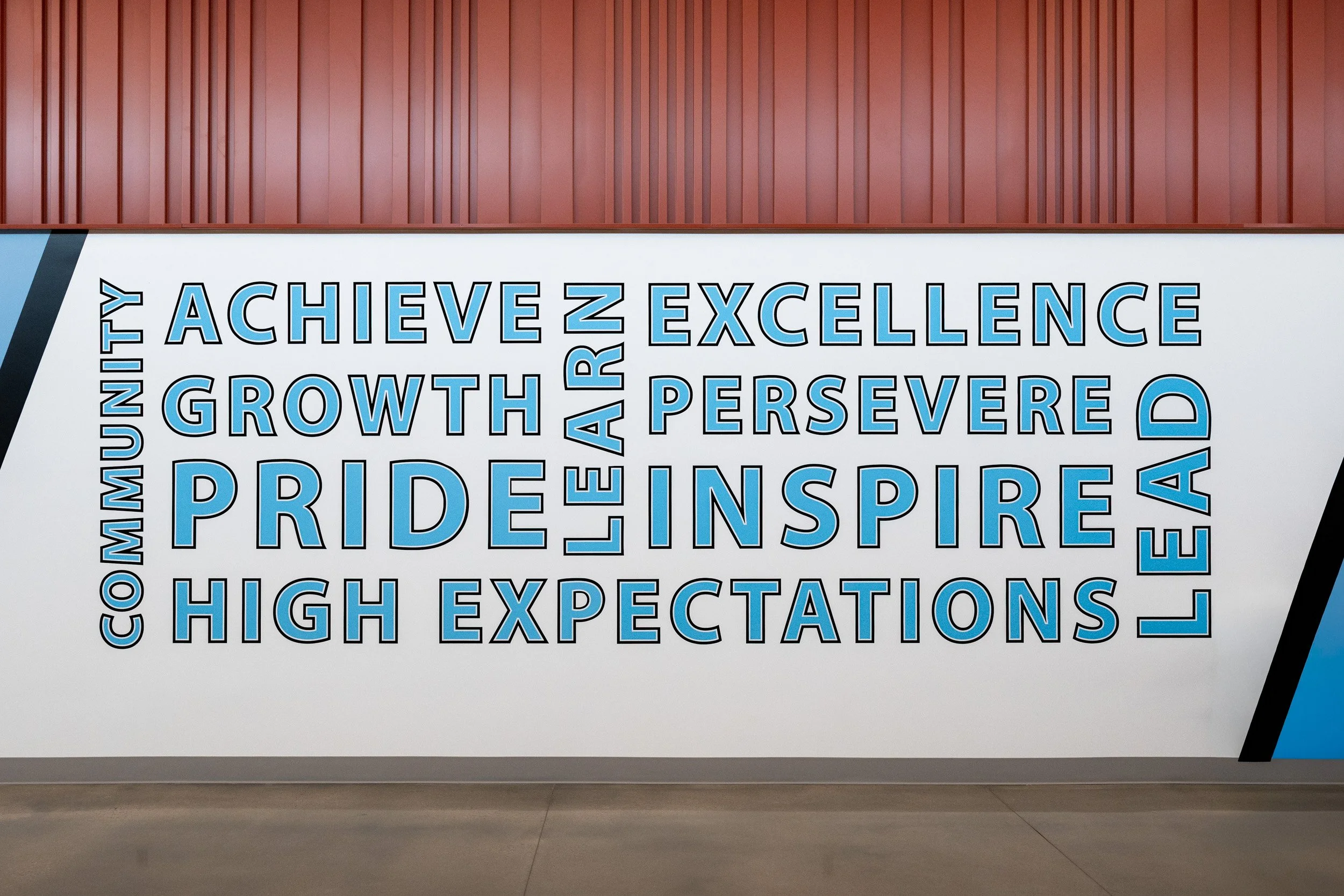
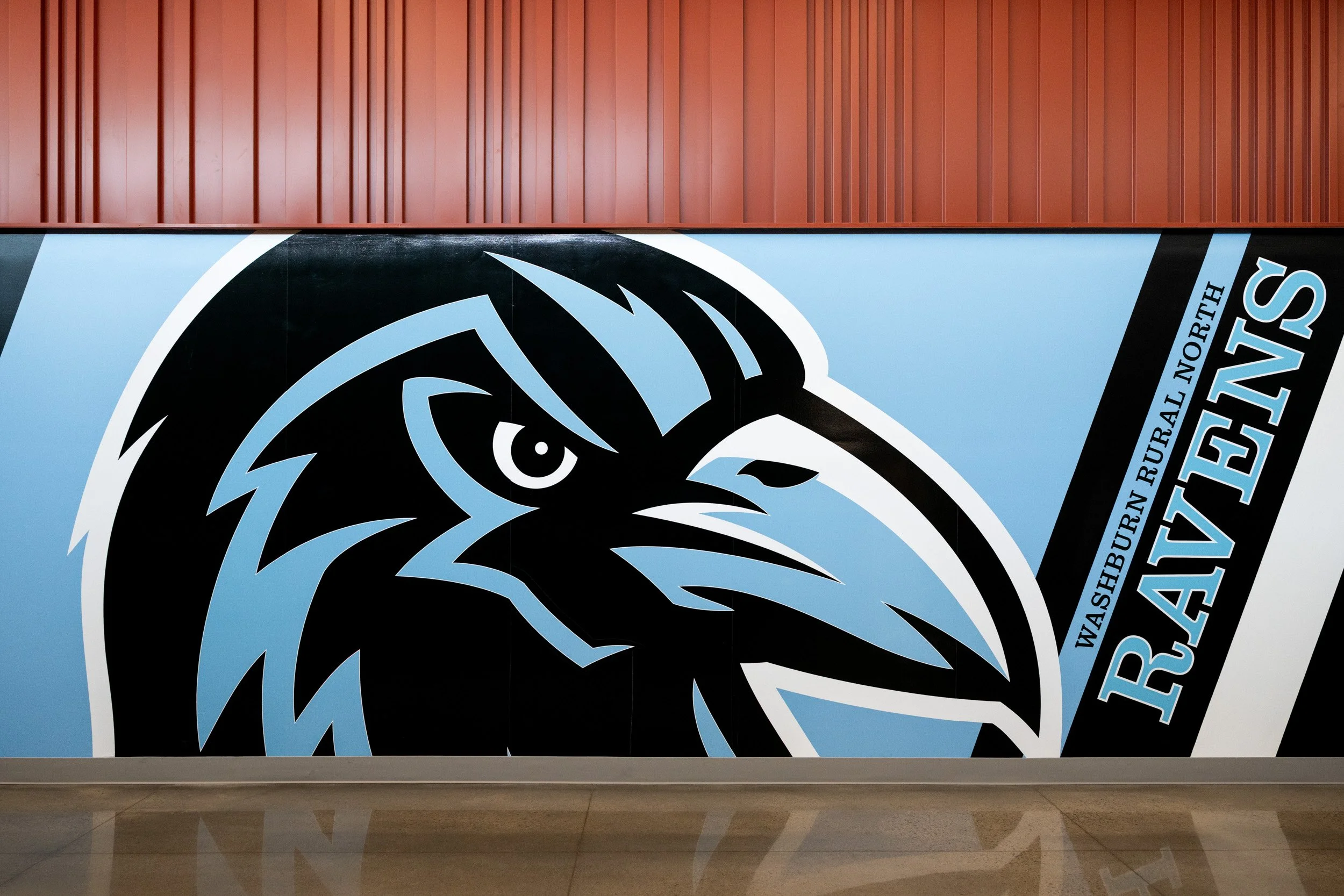
A new school does not inherit an identity. It has to be built.
Washburn Rural Middle School has been part of the district for decades. This was the first time a second middle school was being opened, which meant everything that normally feels established had to be defined from the ground up. The name, the mascot, the colors. Those decisions were shaped by students, families, and the broader community, creating something people could recognize as their own.
By the time the building was finished, that identity was already taking form. It showed up in the environmental graphics, the values on the walls, and the details throughout the space. These elements are not decorative. They are how a school begins to define itself in a way people can see and understand.
Photographing those pieces was about documenting that identity at its earliest stage, before traditions exist and before the space has a history.
For the students walking in on day one, this is not an addition to something familiar. It is the starting point.
What This Turned Into
The final set of visuals gave Washburn Rural North Middle School something they could use immediately.
The building could be understood before anyone ever walked through the doors. The images made it possible to show how spaces connect, how movement flows, and how the day is structured. They also gave the school a way to communicate identity and culture in a way that felt visible and consistent from the start.
Having worked in schools myself, that is the part that matters. When people know where they are going and what to expect, everything runs smoother. There is less confusion, fewer bottlenecks, and fewer problems that have to be solved in real time. That clarity shows up in how the building functions, how expectations are communicated, and how people move through the space.
This was not about documenting a building. It was about helping a school start on solid ground.