Muse Furniture and Design
Photographing a Walnut Burl Credenza Under Constraint:
A study in material, precision, and function, captured for digital and publication use
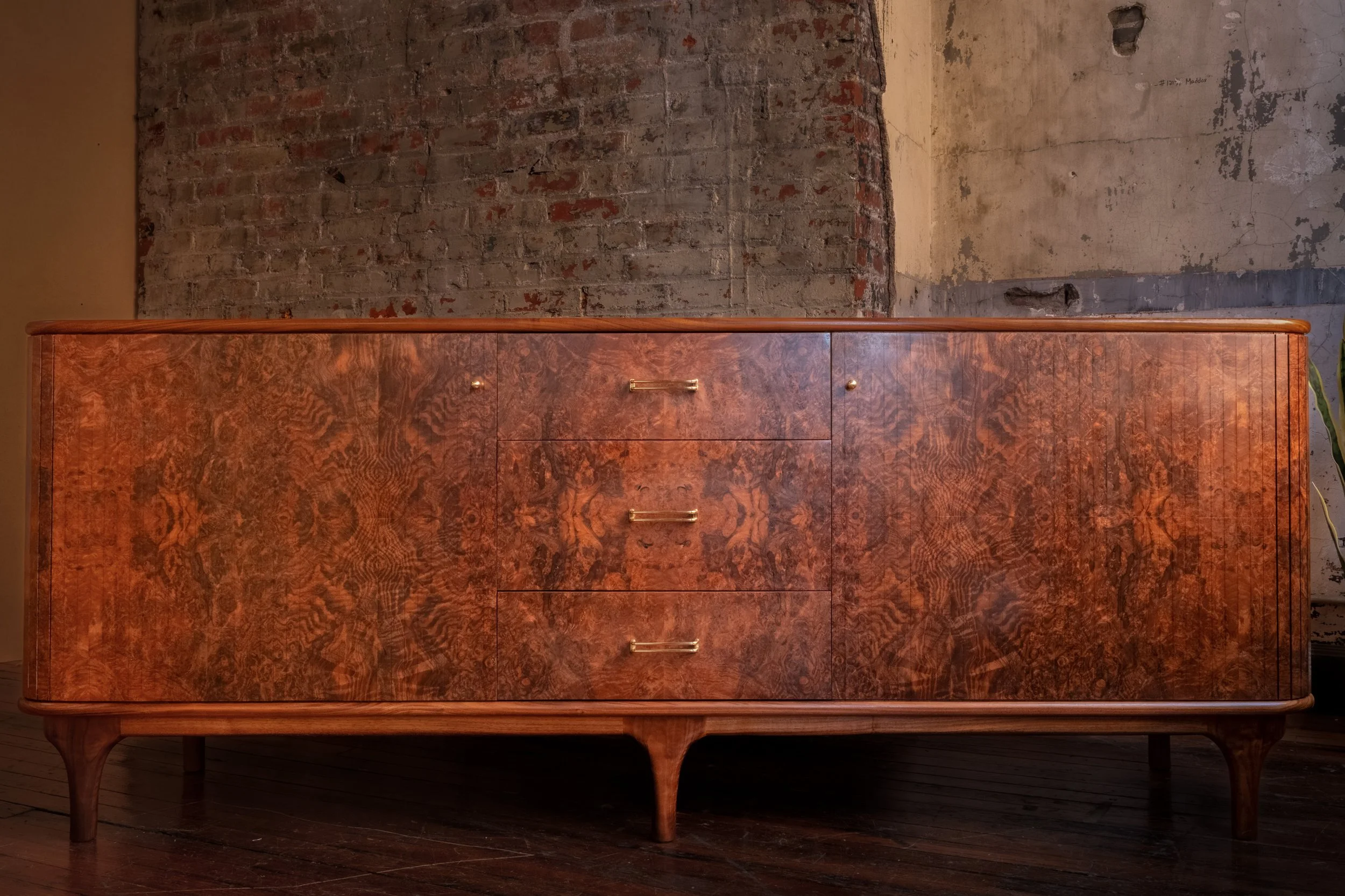
This project with Muse Furniture and Design centered on a specific problem: how to photograph a one-of-a-kind credenza in a way that preserves the material complexity, construction quality, and functional precision that define its value, even when the viewer will only ever encounter it on a screen. The images were intended for use across a website, social platforms, and submission to design competitions and publications, including Fine Woodworking Magazine, which meant the work needed to hold up under close scrutiny as well as in passing.
Josh runs Muse Furniture and Design while working full-time as a firefighter in Kansas City, Kansas. He builds custom furniture in the hours between shifts and submits his work to national publications including Fine Woodworking Magazine. He reached out after realizing there was a photographer working just down the street in Strawberry Hill. What began as a local connection quickly turned into a project that required a high level of precision on both sides.
Material Complexity Meets Precision Construction
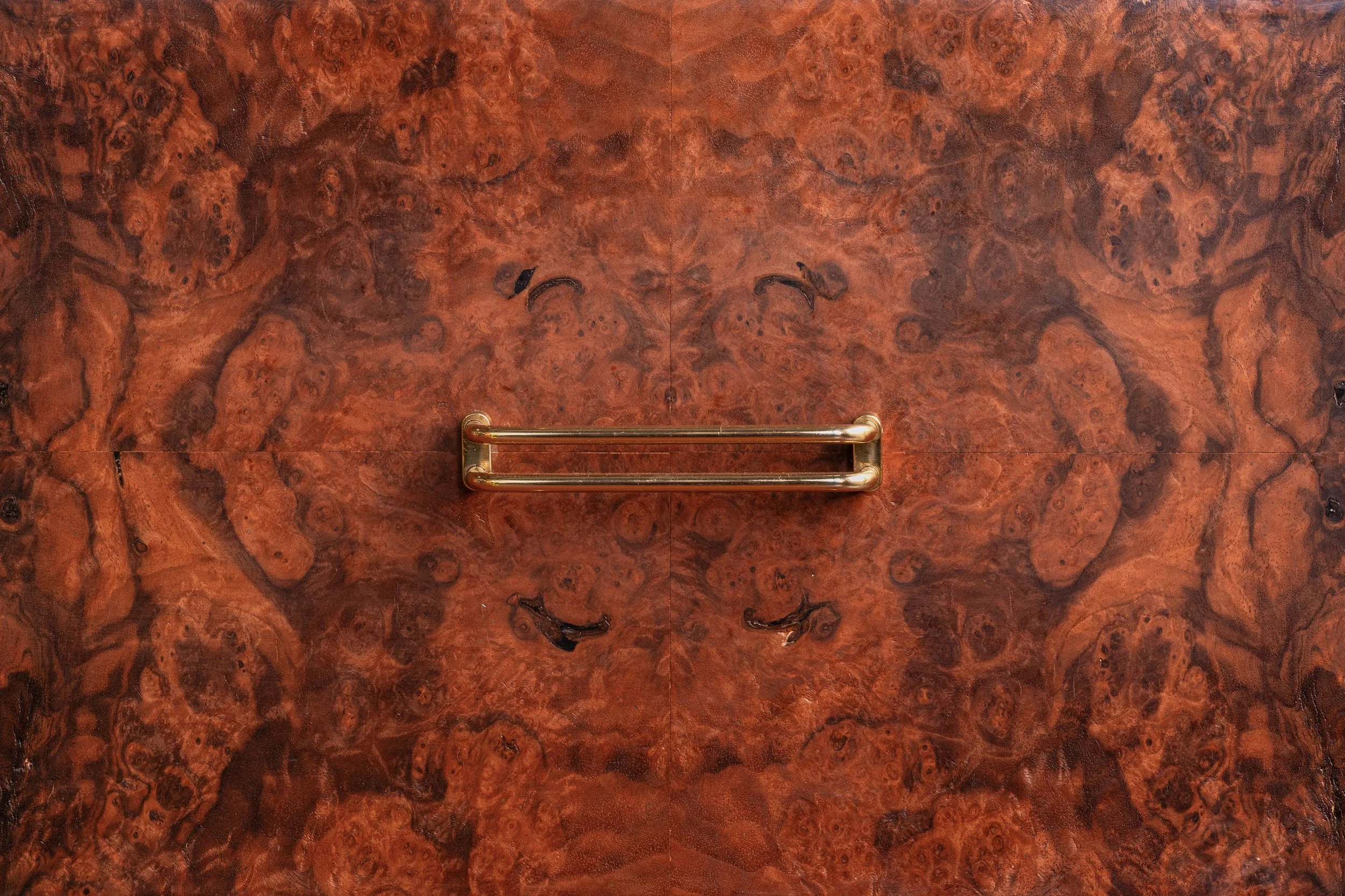
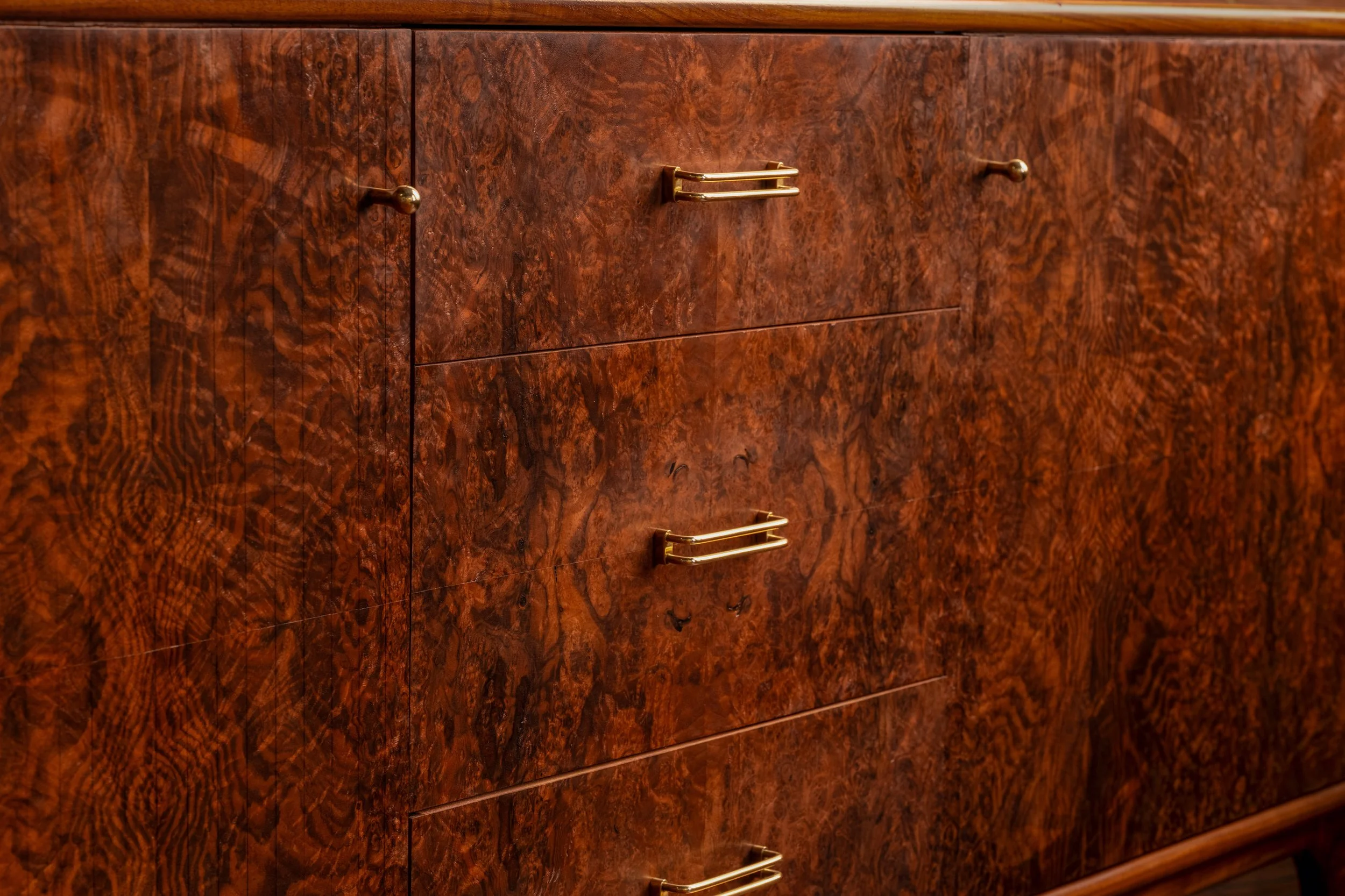
The credenza is constructed primarily from solid walnut, with a walnut burl veneer across the primary surfaces. The burl introduces a level of visual complexity that is difficult to control under inconsistent light, with swirling grain patterns and tonal variation that shift depending on how they are lit. The interior is built from maple for stability, with curly maple drawer boxes joined with hand-cut dovetails. Brass hardware and tapered legs introduce a subtle mid-century influence, while the tambour doors slide cleanly into the body of the piece, requiring tight tolerances and careful execution to function without interruption.
At a distance, the piece reads as controlled and minimal. Up close, it reveals a layered set of decisions in material, joinery, and movement that are easy to lose if they are not handled intentionally.
Where Space, Light, and Subject All Push Back
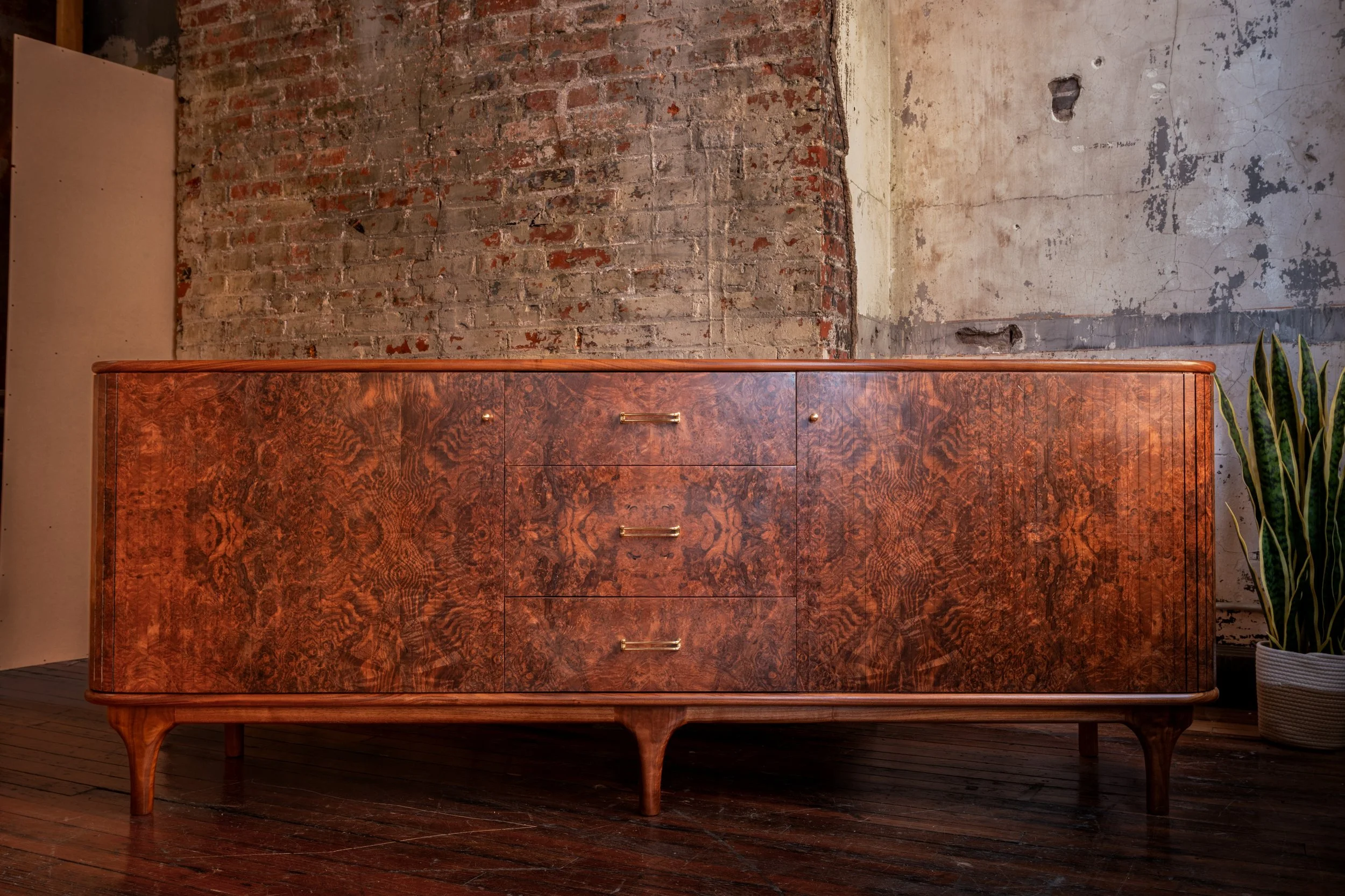
The challenge was not simply to document the piece, but to translate it accurately under conditions that were not especially forgiving. The shoot took place in a warehouse space with limited room to work and a single usable window light source. The scale of the credenza relative to the space required shooting wider than ideal in order to fit the piece into frame, which introduced distortion and required careful planning for correction later.
At the same time, the available light created uneven exposure across the surface. Walnut burl is visually dense and unpredictable, and under uncontrolled light it can either flatten or become overly chaotic. The piece itself also demanded precision. Grain continuity, joinery, finish quality, and the movement of the tambour doors are all details that are easy to lose if they are not handled carefully.
The challenge was layered. Space, light, and subject all introduced constraints, and each of them had the potential to compromise how the piece would ultimately be understood.
Working Wide Without Letting the Piece Distort
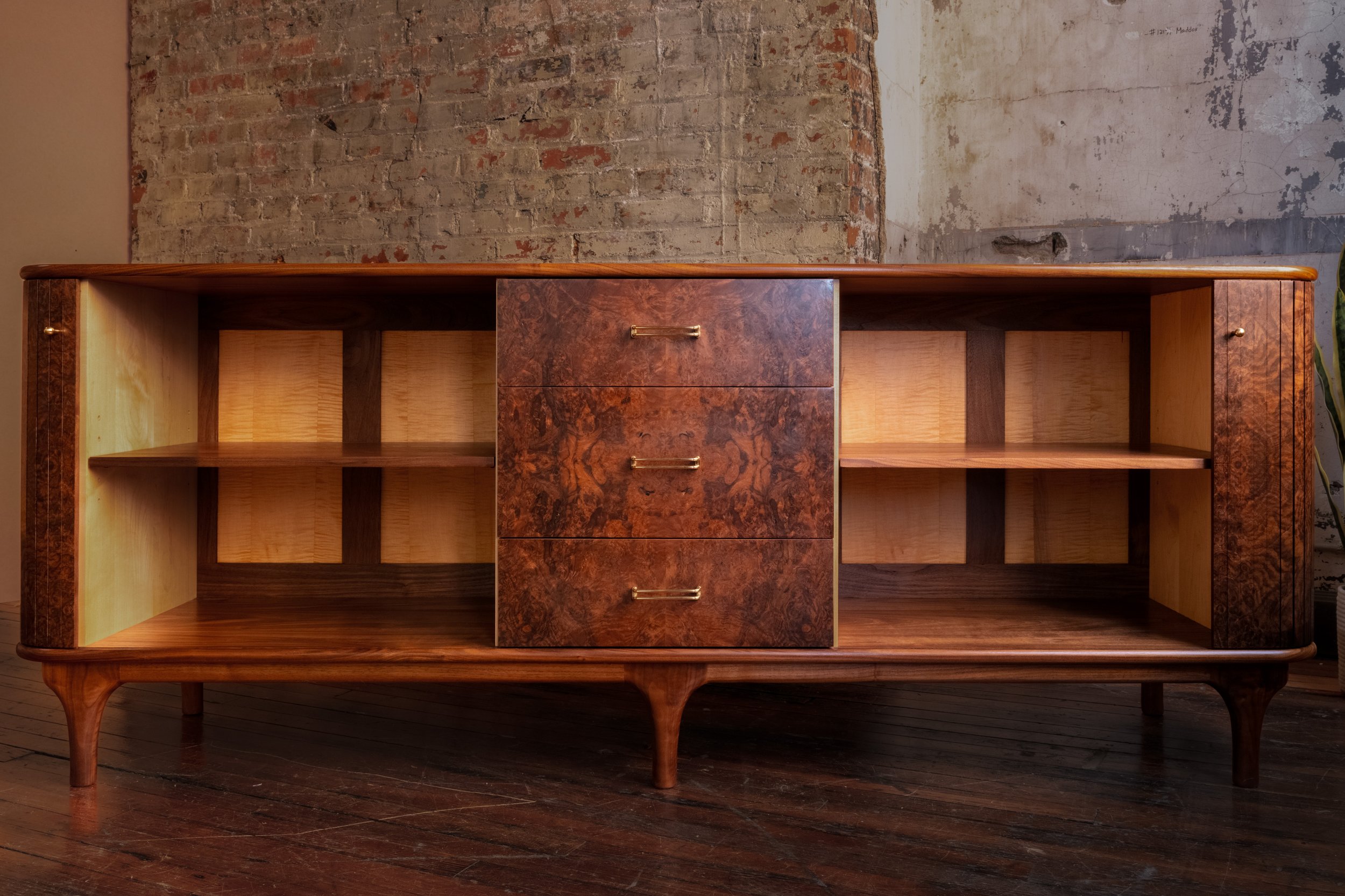
The approach was built around working within those constraints without allowing them to define the final result. Rather than forcing ideal conditions, the focus was on making deliberate decisions at capture and resolving what could not be controlled in post without compromising the integrity of the piece.
Composition and perspective were handled with correction in mind from the outset. Because the space required a wider field of view than ideal, vertical lines and proportions were carefully monitored during capture, with the understanding that they would be refined later. The goal was not to eliminate distortion in-camera, but to ensure it could be corrected cleanly without introducing new issues.
Light was approached with similar restraint. The single window source created direction and inconsistency, particularly across the burl surfaces. Multiple exposures were captured and blended to retain detail across highlights and shadows, allowing the material to read with depth while remaining cohesive across the entire piece. Particular attention was given to how the burl was rendered, including the continuity and symmetry created through bookmatching across the doors. The lighting needed to support that structure, not compete with it.
Function required a different approach altogether. The tambour doors are a defining element of the piece, designed to move smoothly and disappear into the body without interruption. Still images establish the form and material, but they cannot fully communicate how the piece behaves. Motion was used to show that interaction clearly, reinforcing both the design and the level of precision required to execute it.
Making Craft Visible: Grain, Joinery, and Motion
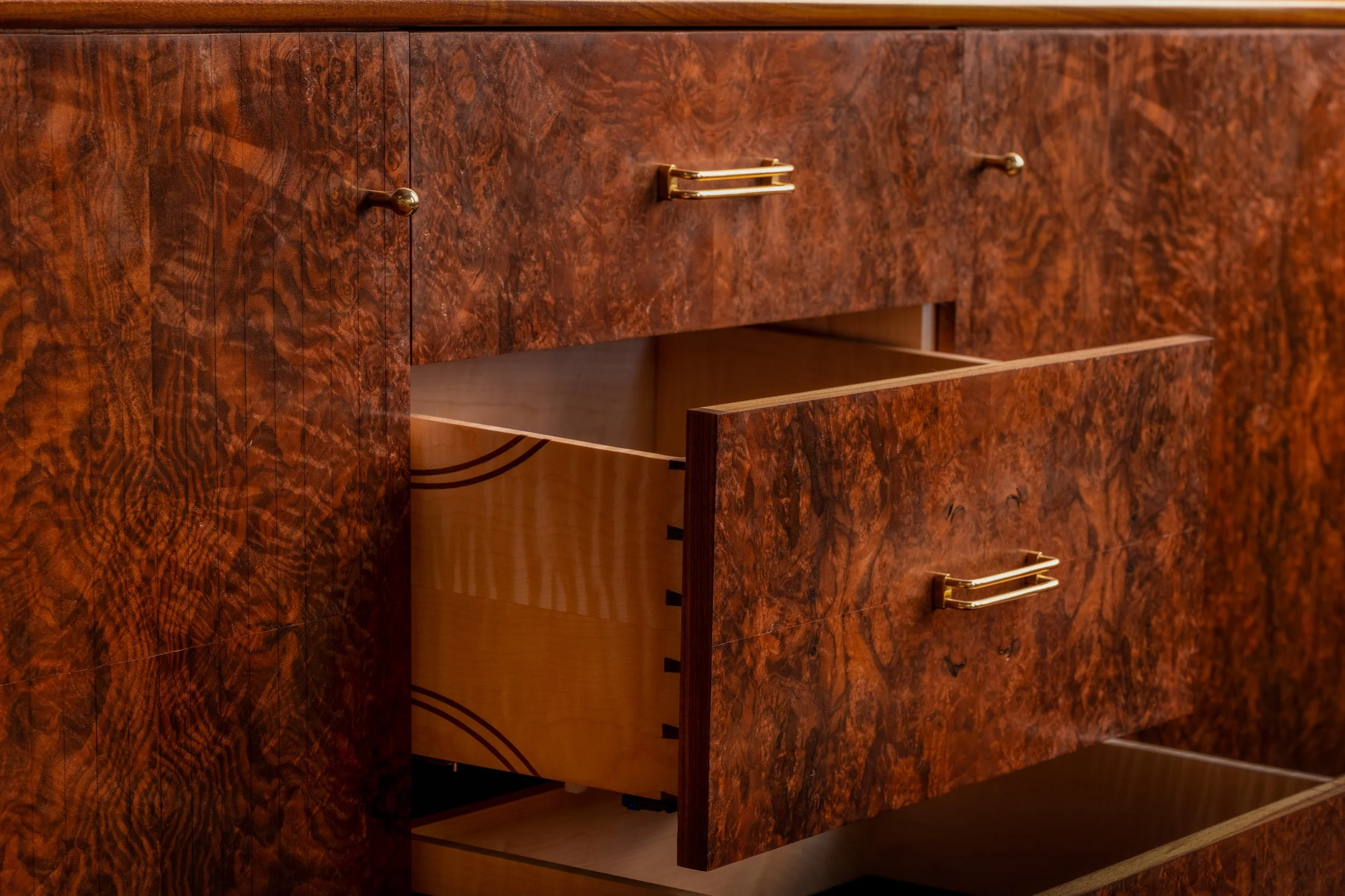
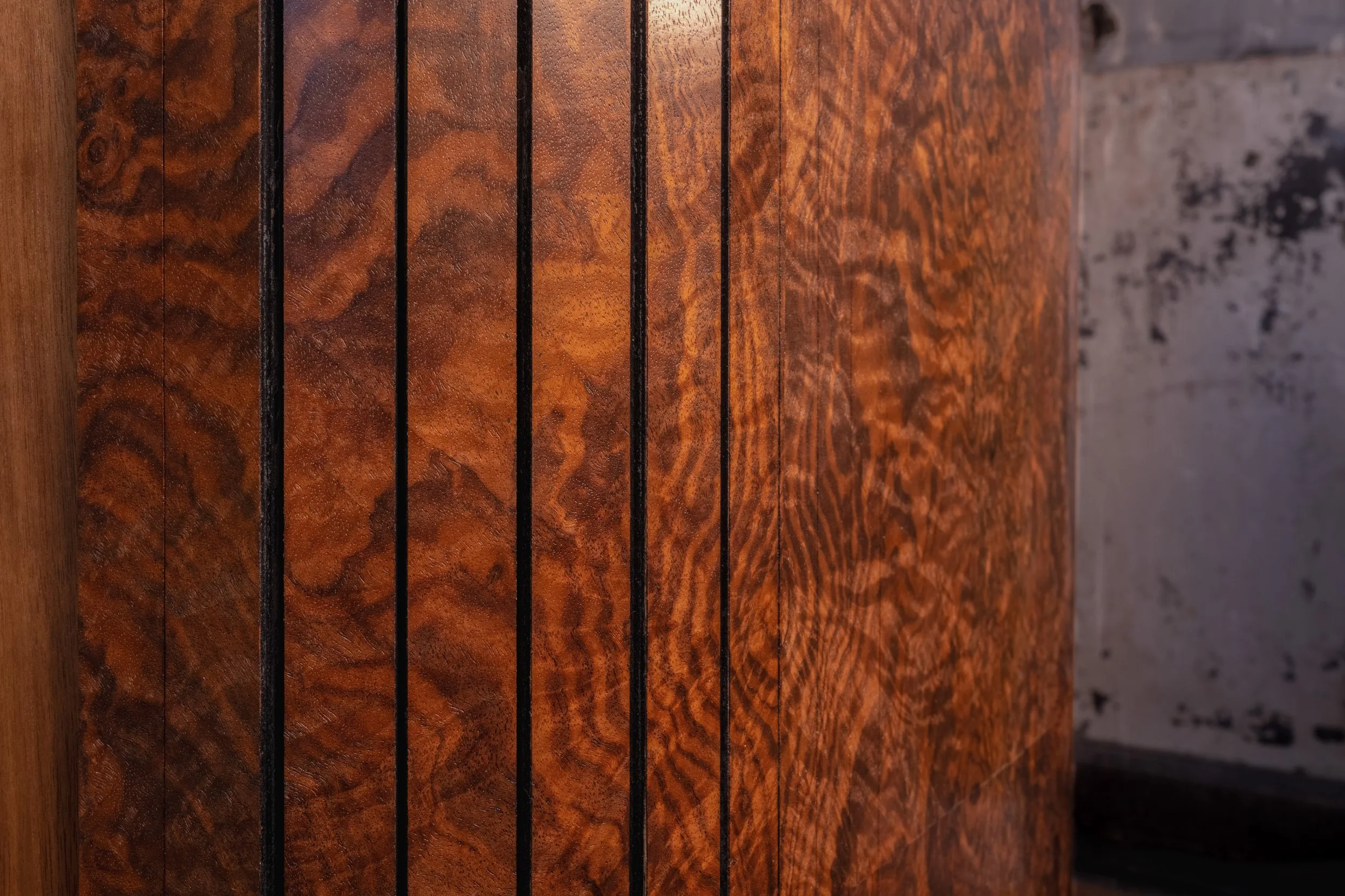
The final set of images and video was built to layer understanding rather than rely on a single perspective. Full compositions establish proportion and presence. Detail images isolate the elements that define craftsmanship, including grain continuity, joinery, and interior construction. Interior views reveal aspects of the build that would otherwise remain hidden.
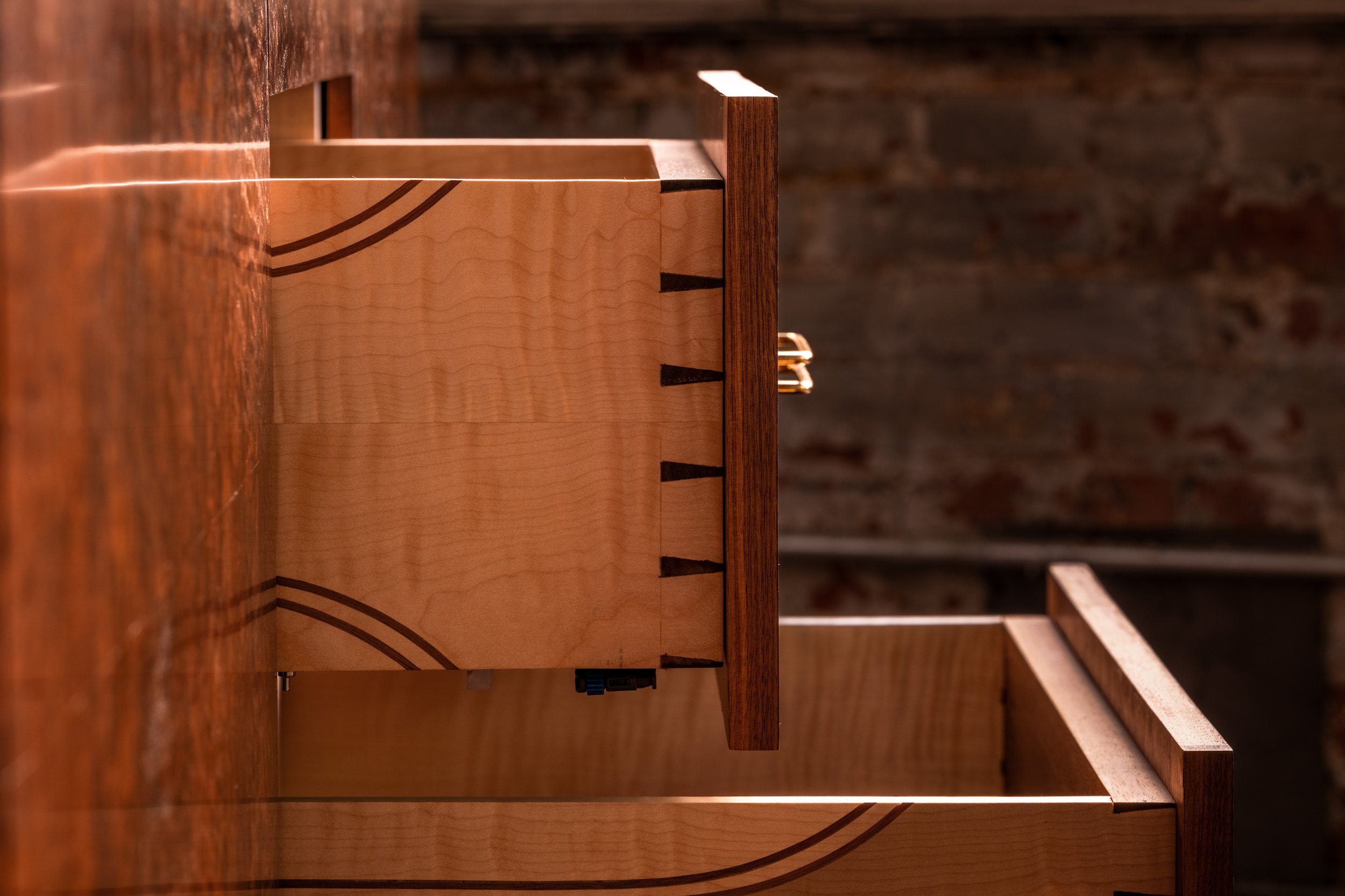
Video completes the representation by showing how the piece moves and functions in real space. Each component serves a specific role, and together they create a complete visual record of the work.
A Complete Visual Record for Real Use
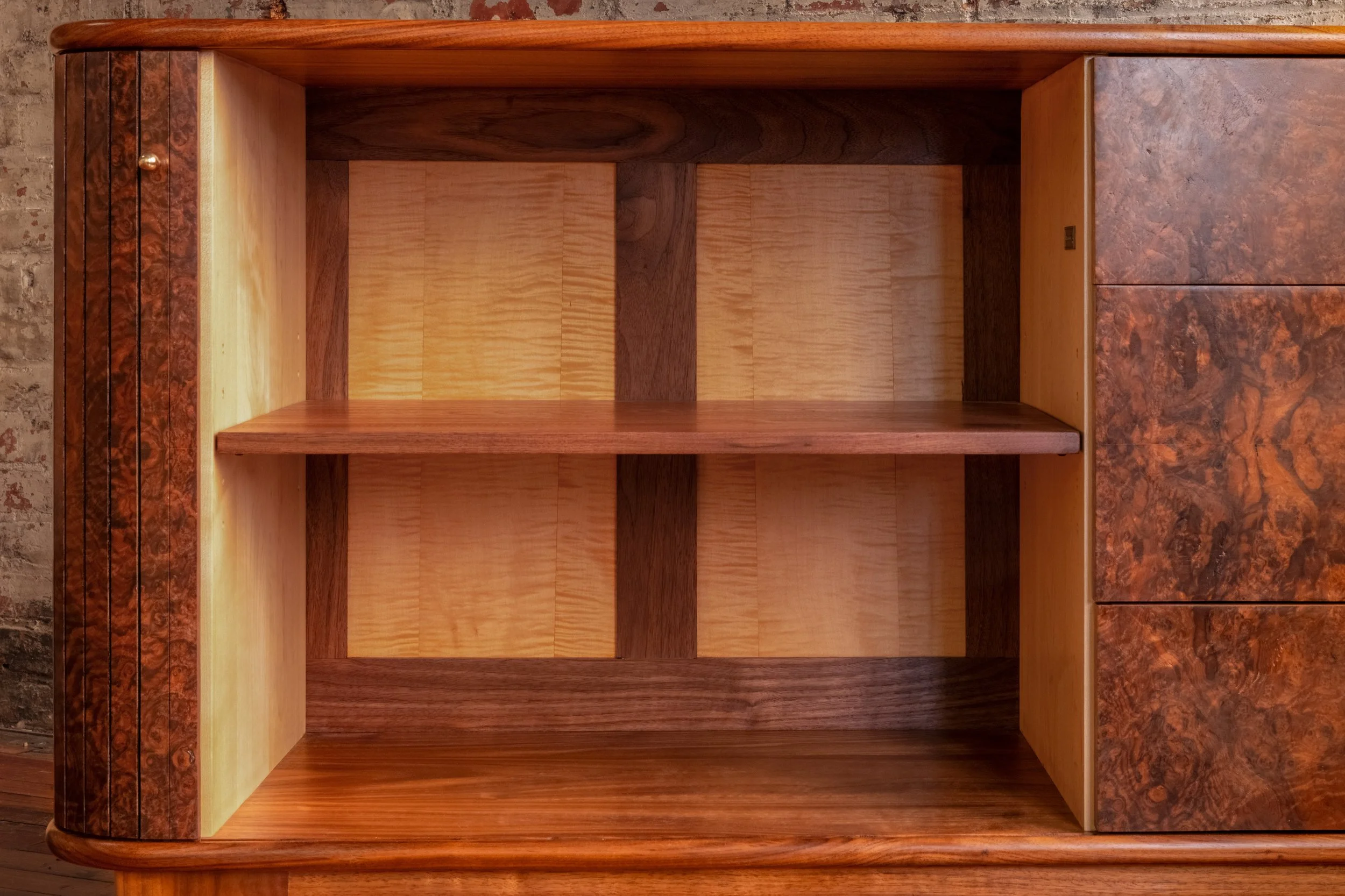
The final assets created a cohesive visual system for the credenza that can be used across Muse Furniture and Design’s website, social platforms, and submission materials, including entry into Fine Woodworking Magazine. More importantly, the piece now holds its value in a digital format. The material reads with depth, the construction is visible, and the function is clear without explanation.
The work does not rely on context or proximity to be understood. It stands on its own.