Field Notes: Bushveld
Seeing Beyond Spectacle
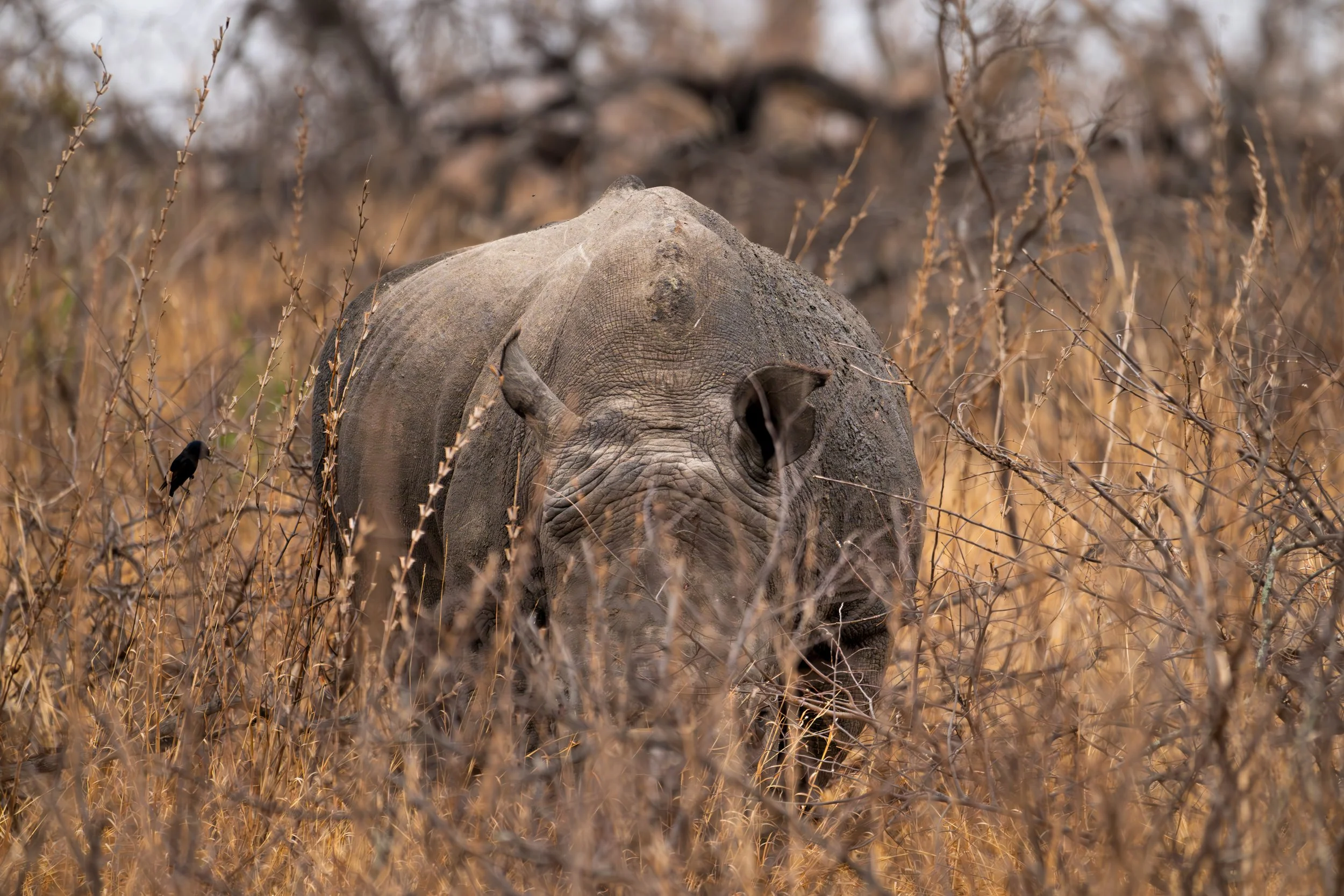
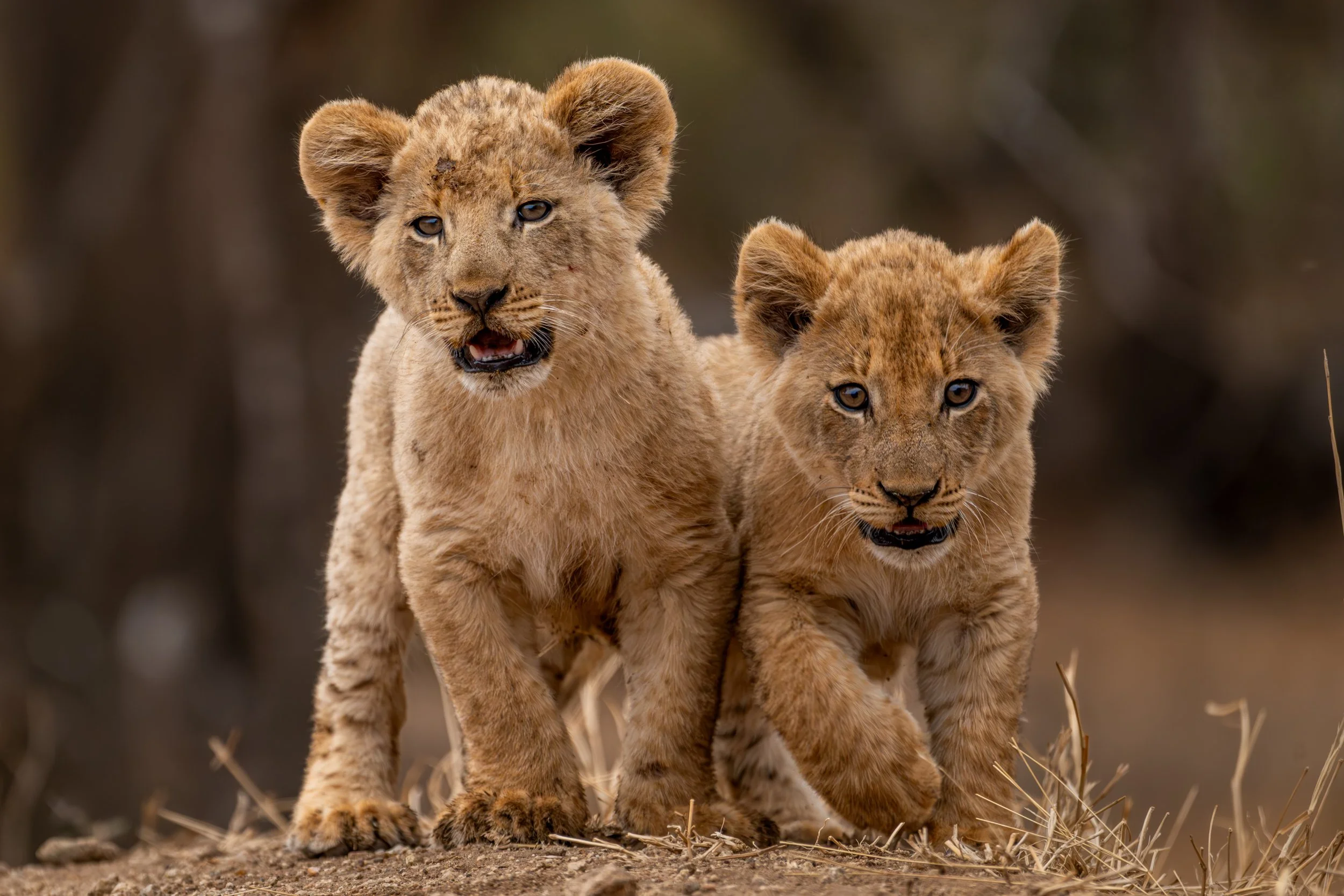
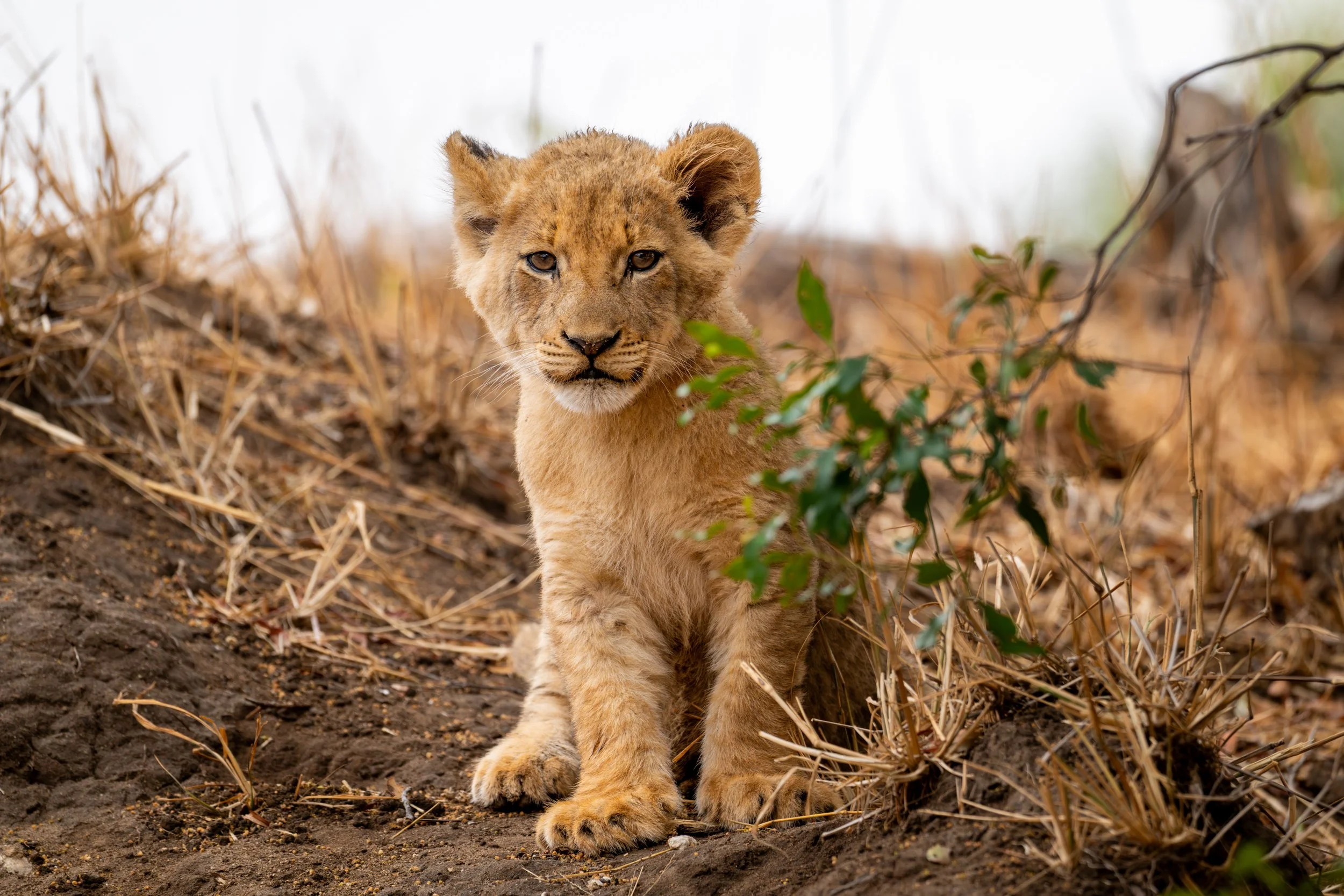
About thirty minutes into our first game drive, we came upon a pride of lions stretched out across a dam, just laying in the middle of the road. There was an elephant carcass nearby, and these lions were quite literally fat and happy. I had a long lens on and was in photographer heaven: adult lions lounging around and cubs playing. There was so much going on that it was hard to choose a subject.
I eventually landed on a lion and a lioness straight ahead of us in the middle of the road. The line of sight was clear, and the elevation had them sitting almost at eye level with my lens.
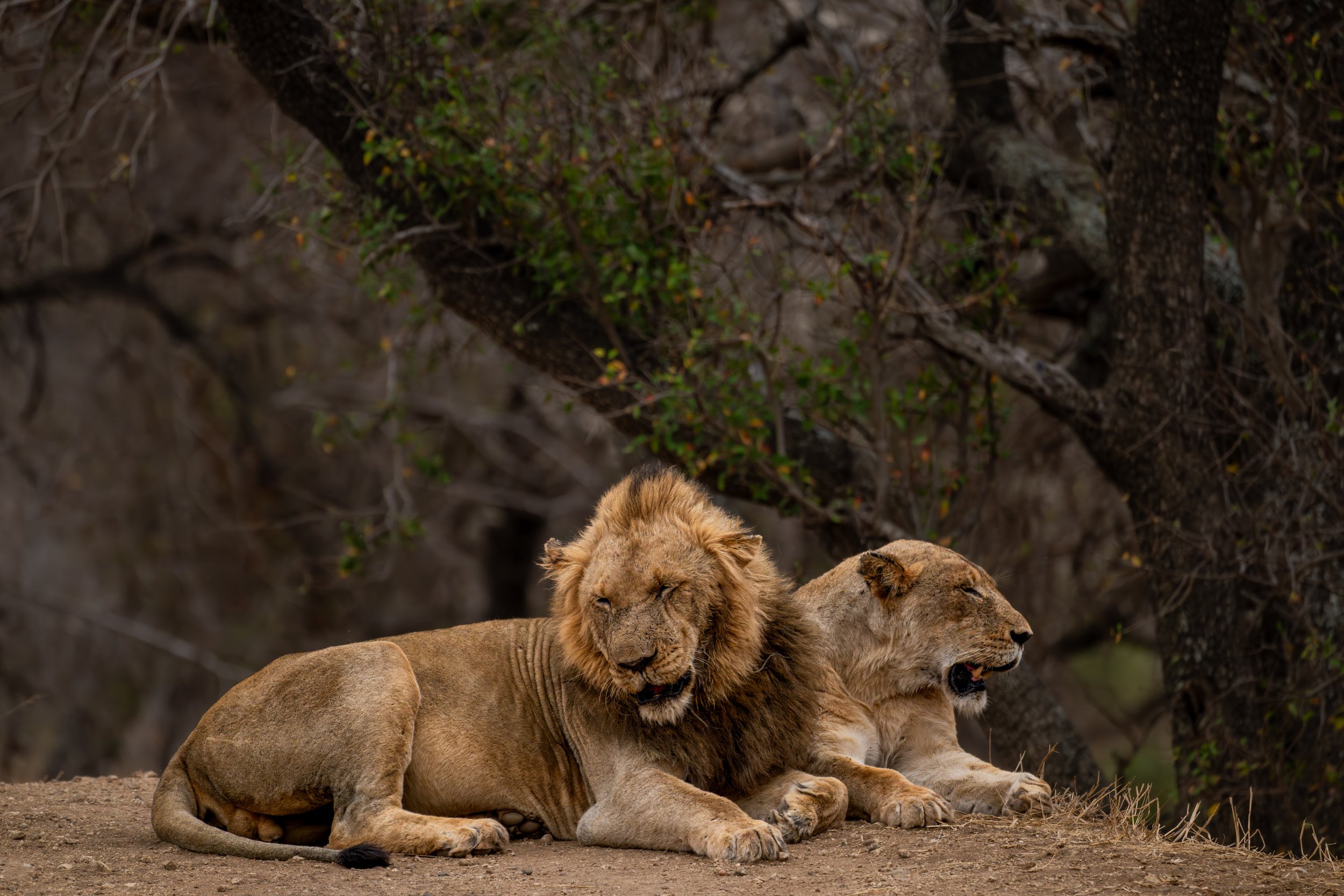
Eventually, the lioness stood up and started walking lazily toward the vehicle, and I just kept shooting and didn’t think much of it. I hadn’t really realized that I was actually there and that the lioness was actually walking toward me. I was just clicking away. Then she got so close that she was out of focus. I’d hit the limit of the lens, and she was still getting closer.
I lowered the camera and just watched her. She walked right past me, close enough that her head was level with my leg. There’s no door on the side of the safari vehicle, no real barrier, and for a second she glanced over and made eye contact as she passed. Not aggressively, not even curious. She kept moving without breaking stride.
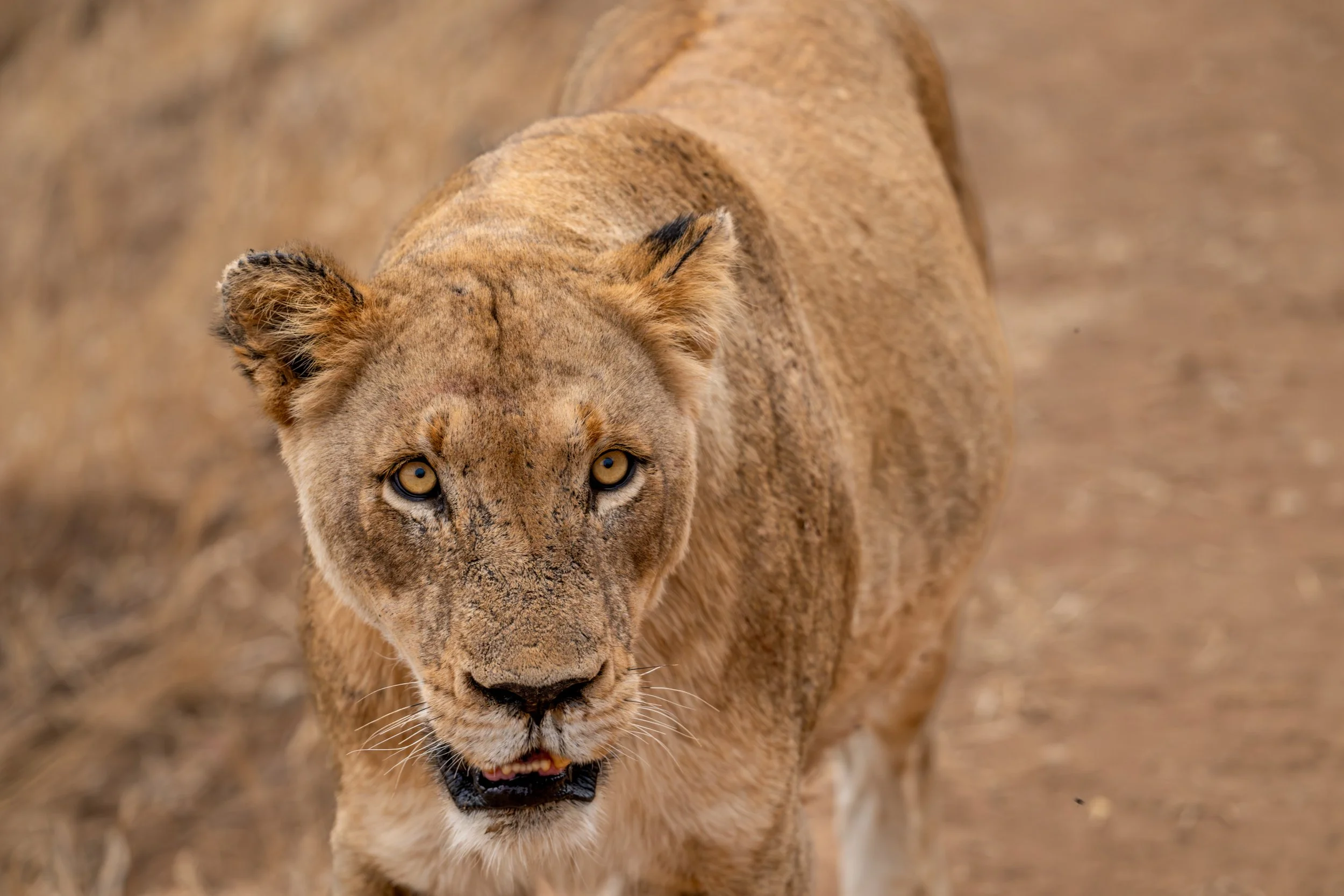
Up to that point, I had been operating the way I usually do, like I’m outside of it, just there to observe and capture. There’s a level of separation that comes with that. You’re looking at something through a lens, framing it, making decisions about exposure, but you’re not really in it.
When she got that close, that separation was gone. I was in the frame rather than capturing it. It snapped me into the present. I had no role in what was happening. Everything in that moment was happening to me. I wasn’t thinking about photos anymore. I was just there, watching the lioness walk by, aware of how close she was and how little control I had in that moment.
I didn’t miss a shot. If anything, that was the first moment that felt real.
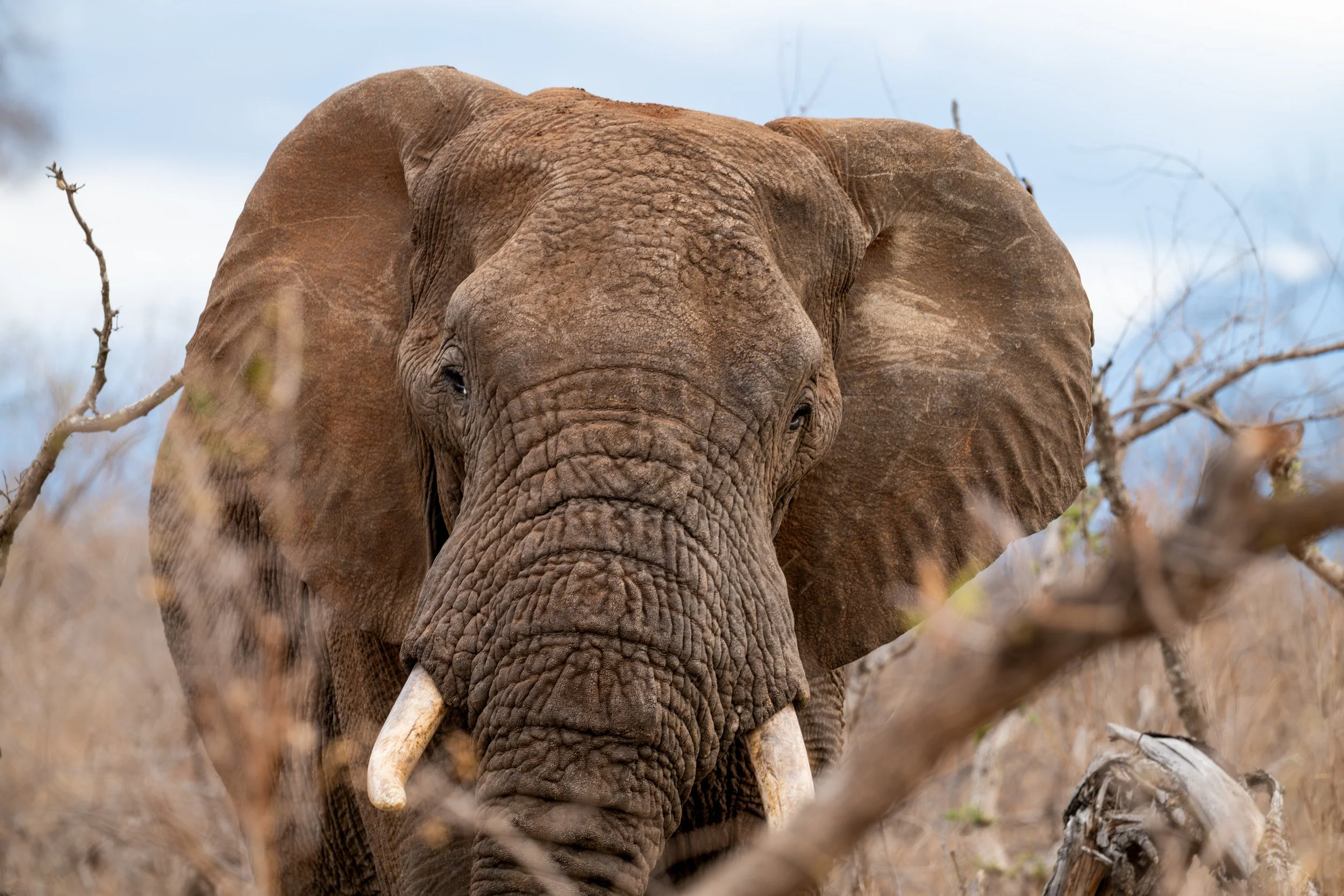
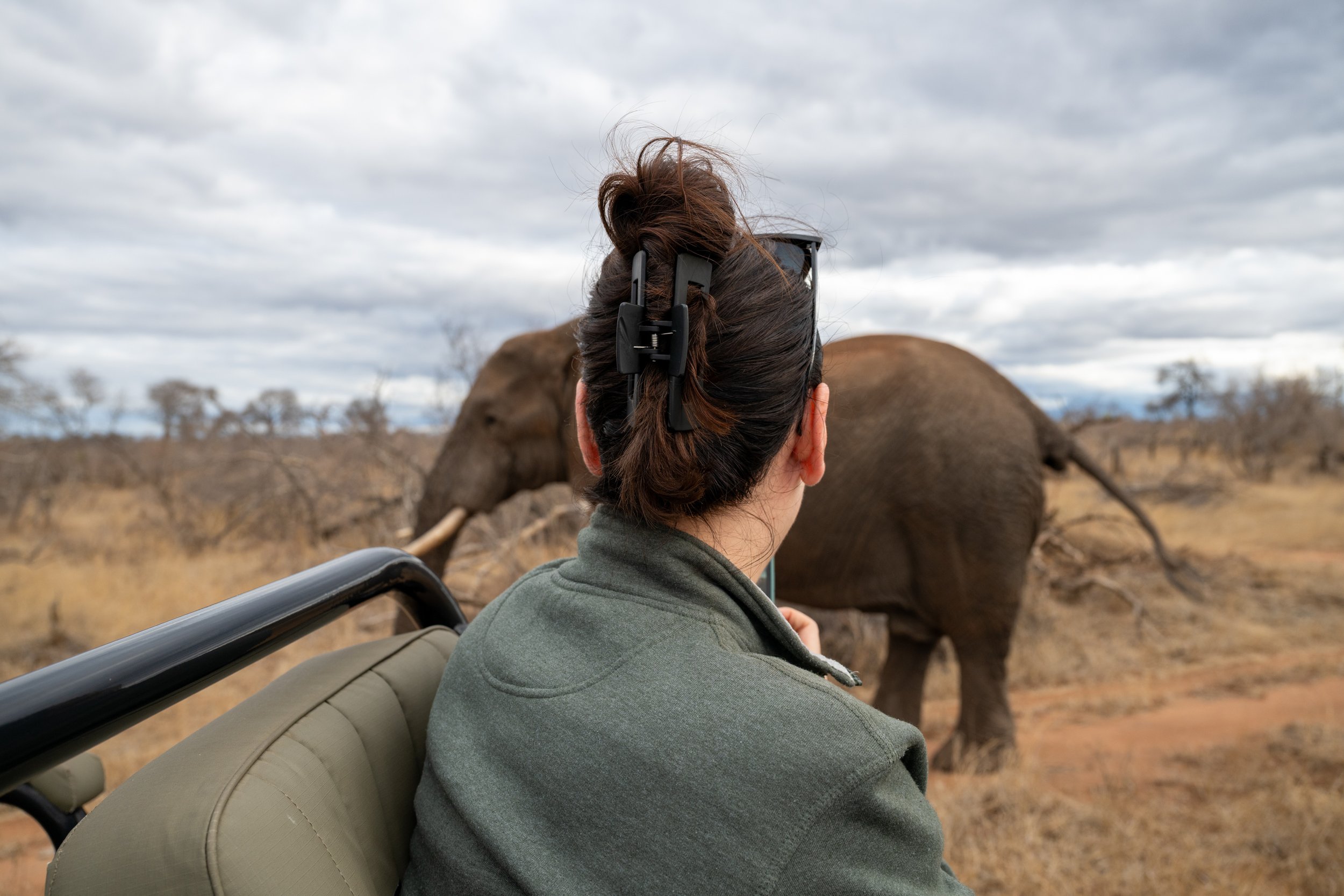
A few days later, we had a very different interaction, this time, with an elephant. Most of the animals we saw treated the vehicle like a part of the landscape. They are habituated to the vehicles so as to make its inhabitants inanimate objects in the eyes of the animals. You might get a glance, maybe some eye contact, but for the most part, you’re just part of the environment.
This elephant was different.
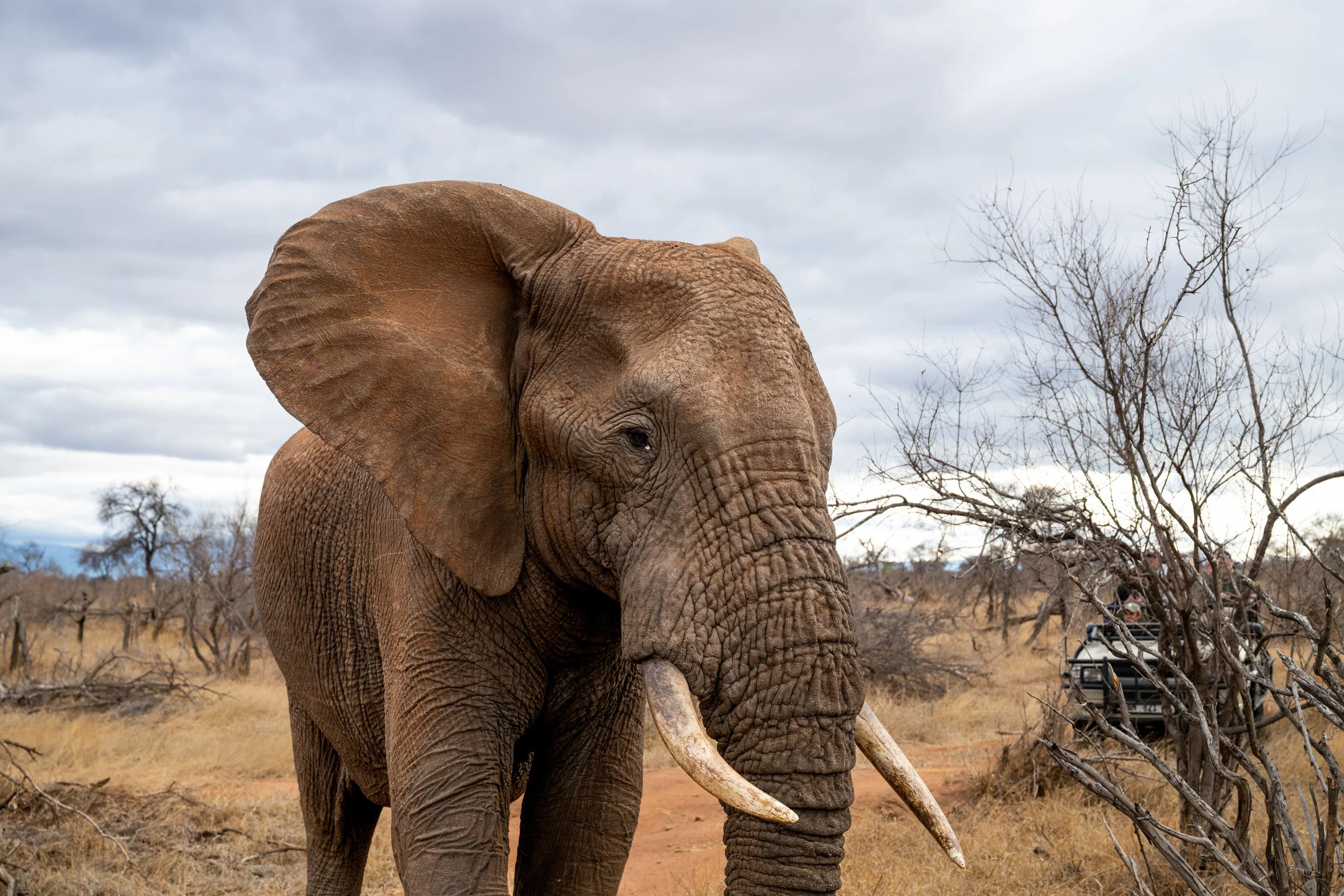
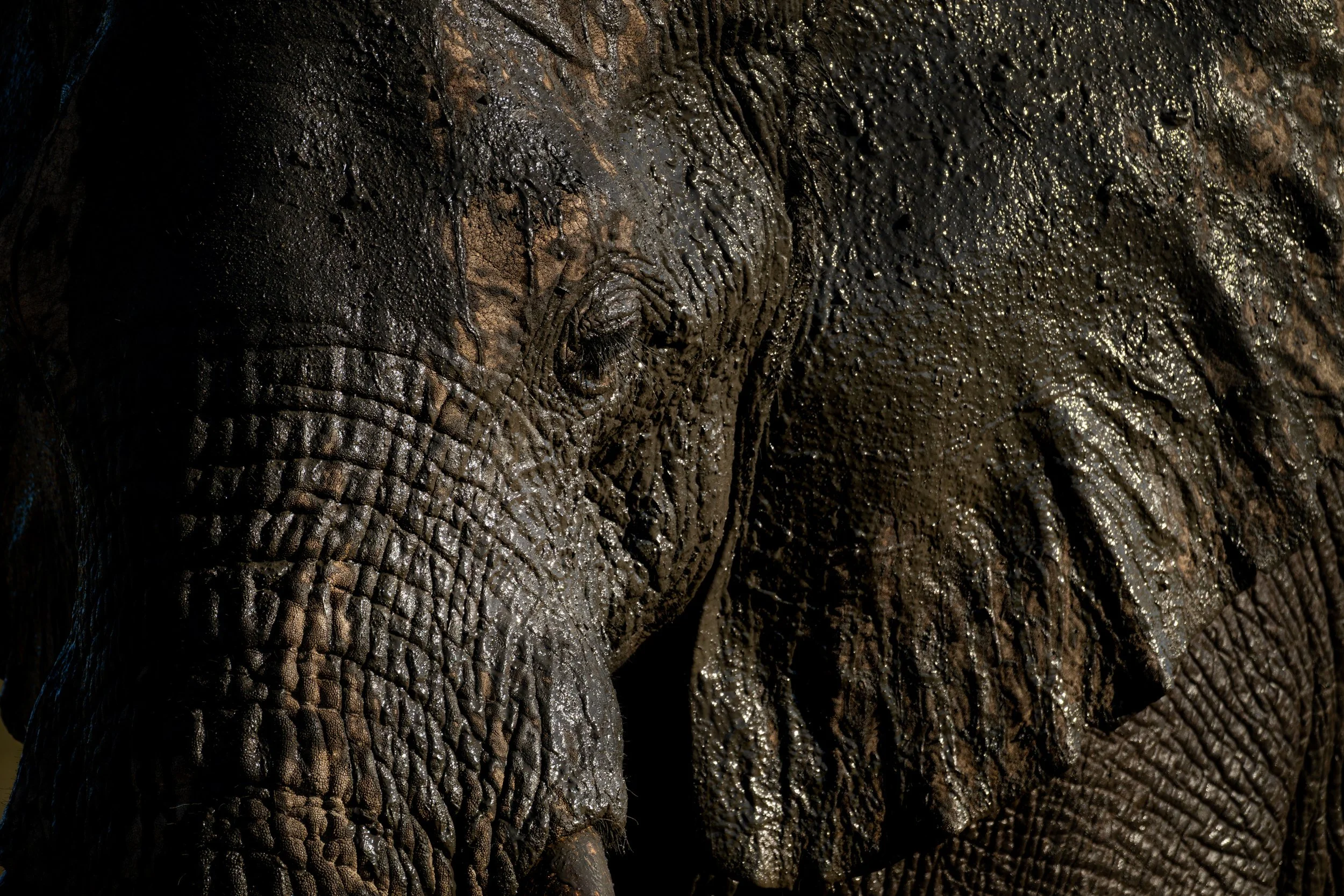
He came up to the vehicle and stayed there, close enough that he was essentially on top of us. The elephant clearly knew we were there and was curious about us. The saying goes that the lions are the king of the jungle, but when you are in the bush it is very evident that the elephants run the show and all the other animals, big cats included, stay out of their way.
Up until that point, the vehicle felt like a boundary that we were safe in. This moment didn’t feel as secure. It felt like that boundary didn’t really exist. We were at the mercy of something much larger than us. Thankfully, he was just curious and eventually went on his way.
It's a long way from Kansas City to South Africa, and by the time you get there, you're tired and a little disoriented. We split the trip between two lodges within the Greater Kruger: Tomo Safari Lodge in the Balule Private Nature Reserve and Senalala Safari Lodge in the Klaserie Private Nature Reserve. Even before the first game drive, just driving from the airport, you start to realize how quickly any sense of normalcy breaks down.
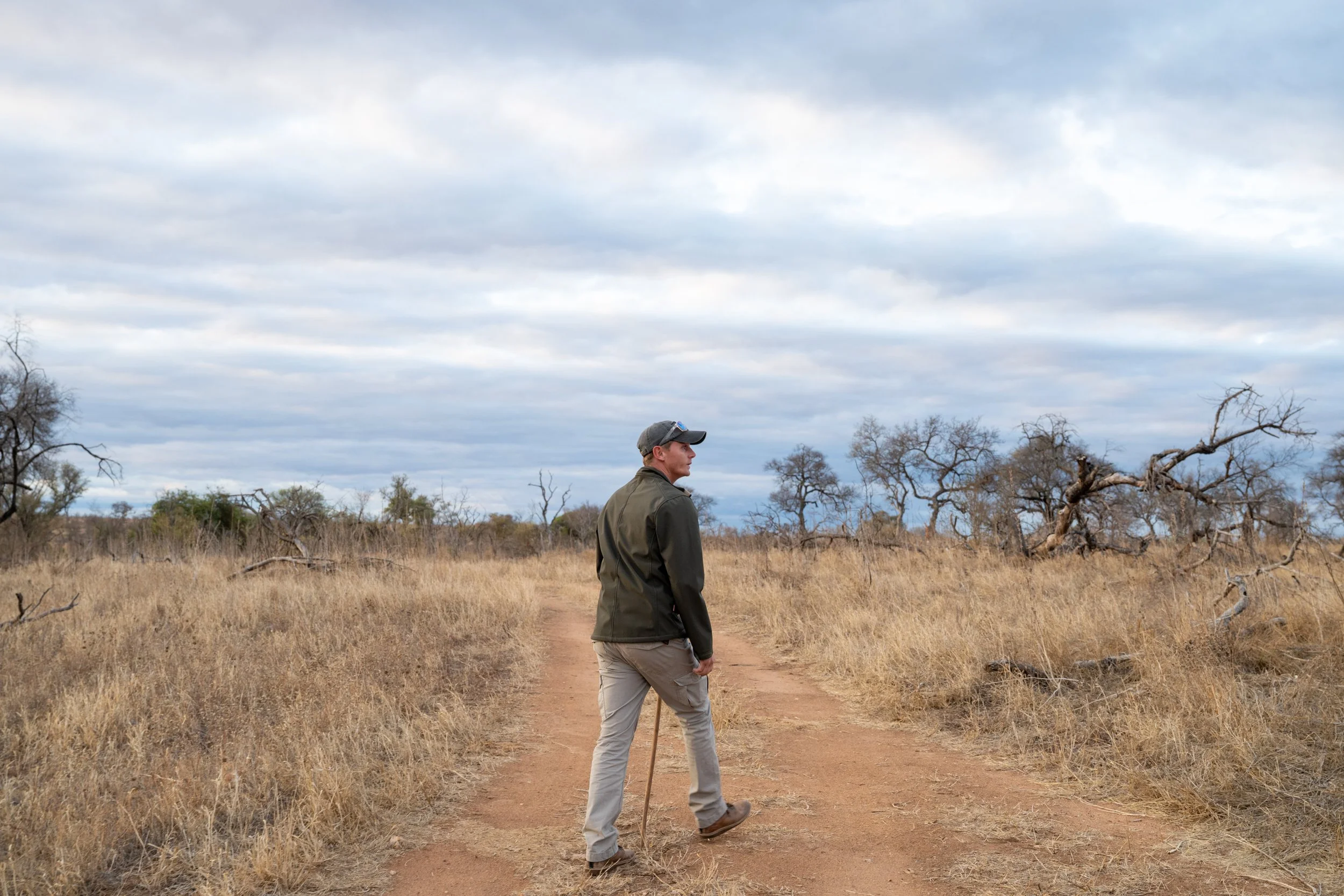
As a photographer, you go into this environment with an idea of what it’s supposed to be like; I was expecting an experience closer to what we’ve seen in National Geographic. I imagined having time to frame a scene, find an angle, and wait for the perfect moment to capture. Once you’re on your first game drive, you realize pretty quickly how limited your options actually are. You’re in the vehicle the entire time, and you don’t control where you go, the light, the animals, nor do you have any idea what’s going to happen. The first image I took on the trip was a squirrel, which really says everything.
At the beginning, none of that really registers. Everything is new, and every animal feels significant because you’ve never seen it before, so you shoot everything.
That carried over into the first few game drives. Lions, elephants, giraffes, it didn’t really matter. If it was in front of me, I was taking the photo whether it was a good one or not. Some of the images are all right, and a handful are really good, but most of them aren’t. They’re just records of what I saw. At the beginning, the novelty of it flattened everything. I didn’t know what mattered yet, so I treated all of it like it did.
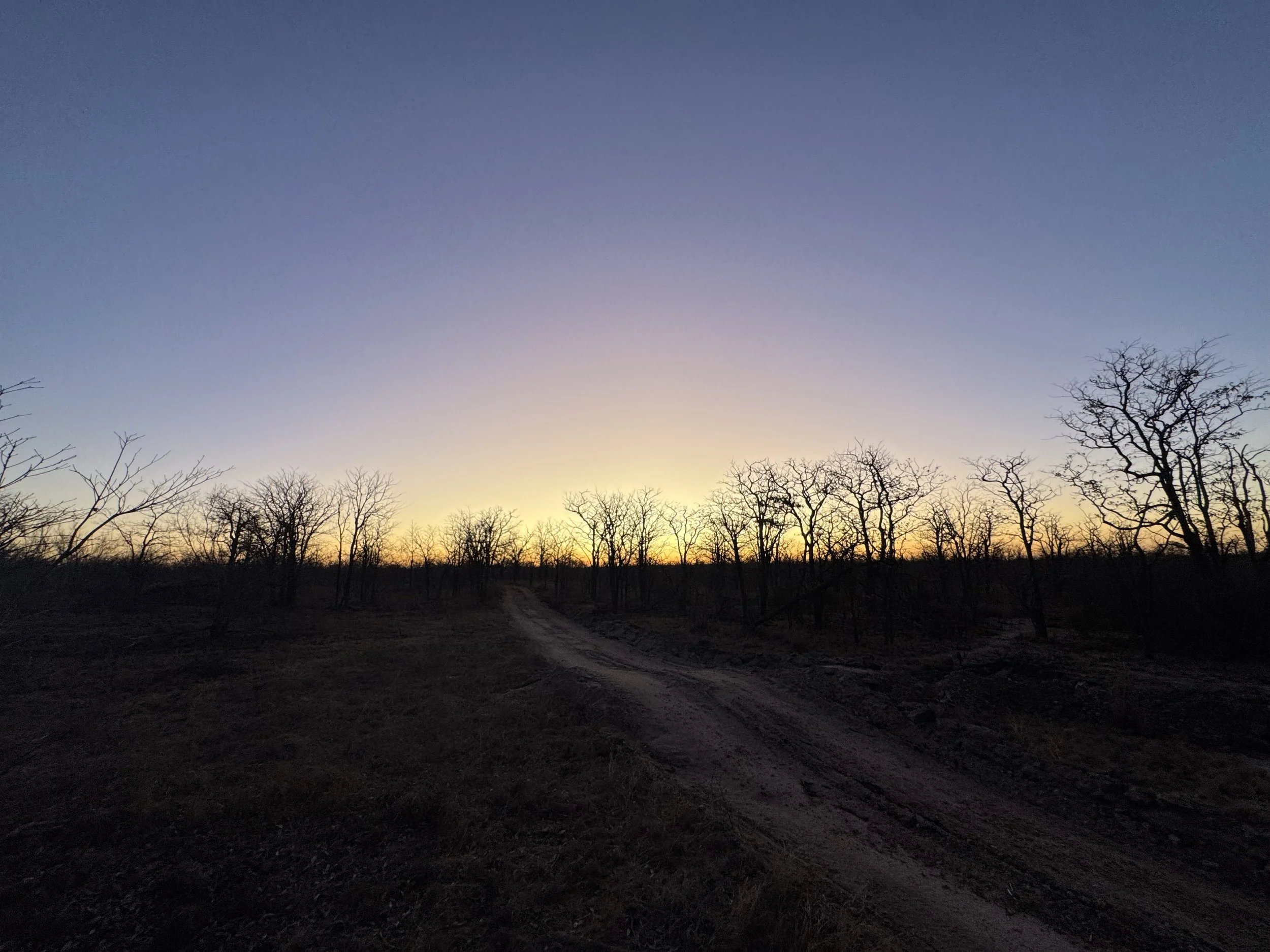
After a few drives, I started to settle into the rhythm of it. The novelty never went away. I was still in awe of what we were seeing, and the sense of surreality never really left. I was adjusting to the environment, and I wasn’t just reacting to what was in front of me anymore. I was starting to discern what actually mattered.
Occasionally, though, something shifts. A head lifts, an animal looks in your direction, two of them interact for a second, and then it’s gone. Those are the moments that actually matter. They don’t last, and if you’re not ready for them, they’re gone before you even raise your camera.
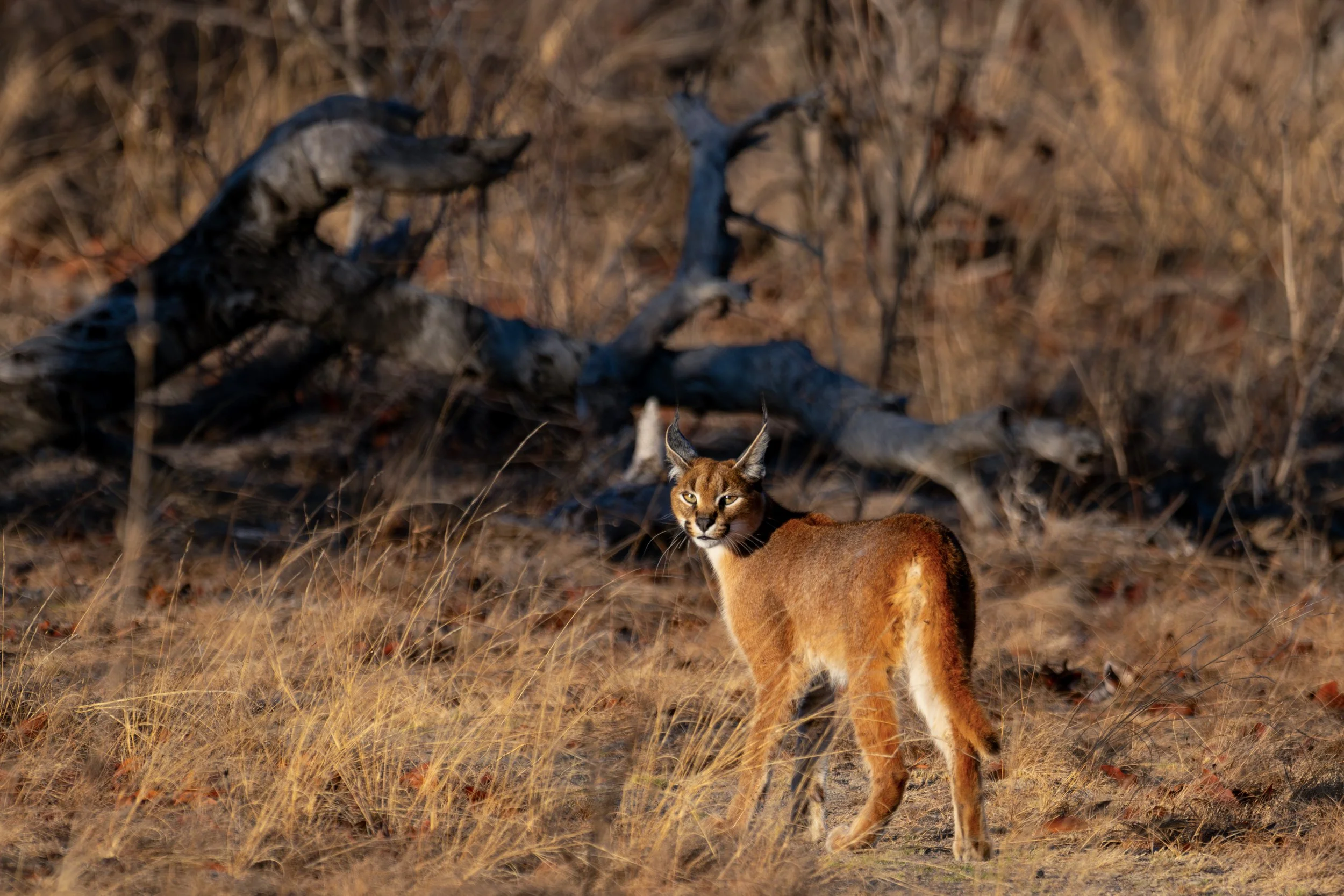
That’s when things started to change for me. I stopped trying to photograph everything I saw and started waiting for something to happen. If it wasn’t there, I wouldn't take the photo. Or at least, I tried. There are still moments where something new appears and the excitement overrides your discipline. That part never really goes away.
Going on safari isn’t cheap, it isn’t fast, and it isn’t easy. Once you’re there, it isn’t curated for you. You’re seeing animals behave like animals: feeding, reproducing, resting, killing, surviving. None of it is sanitized, and none of it is sequenced for our sensibilities. Sometimes it’s brutal. It’s natural splendor.
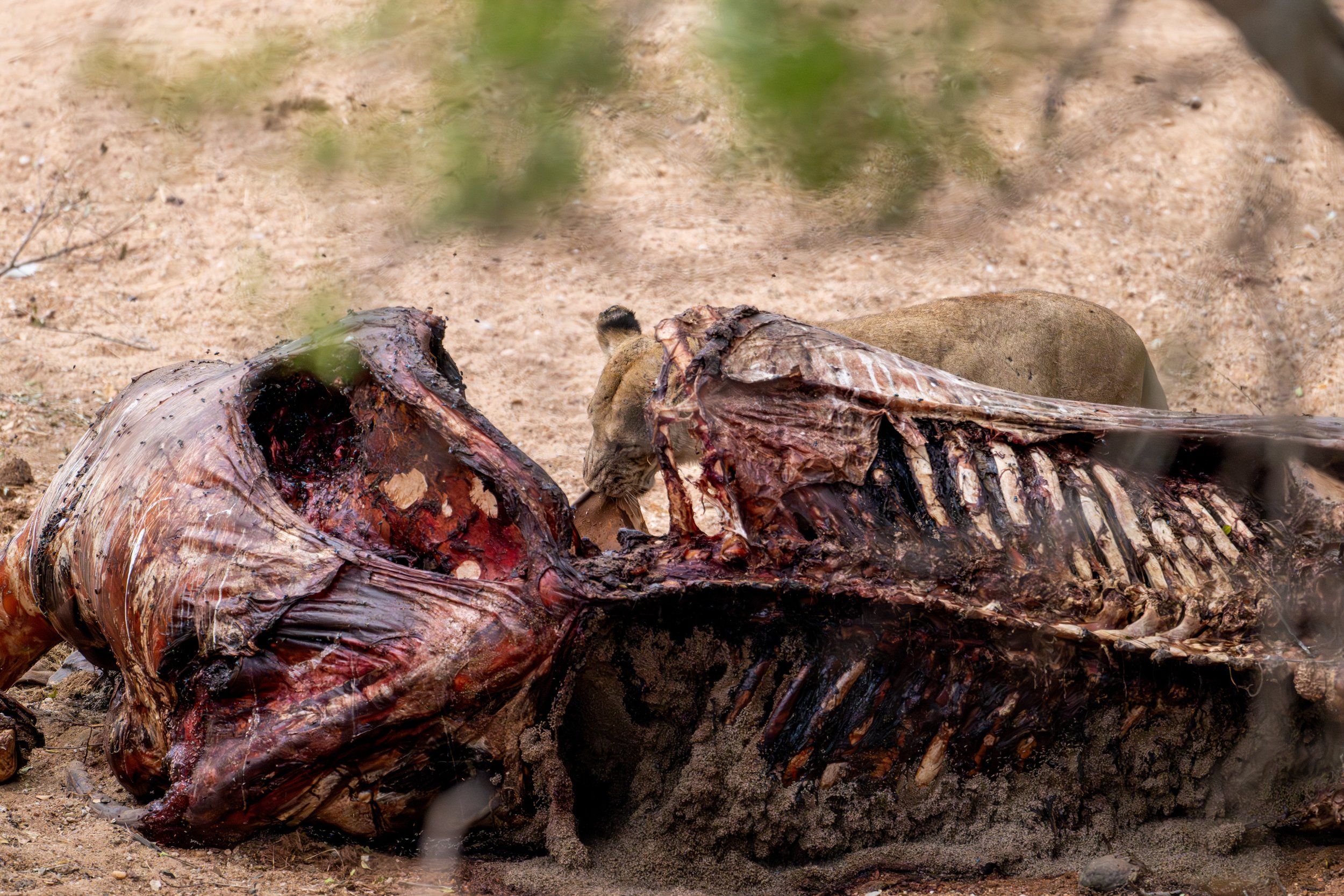
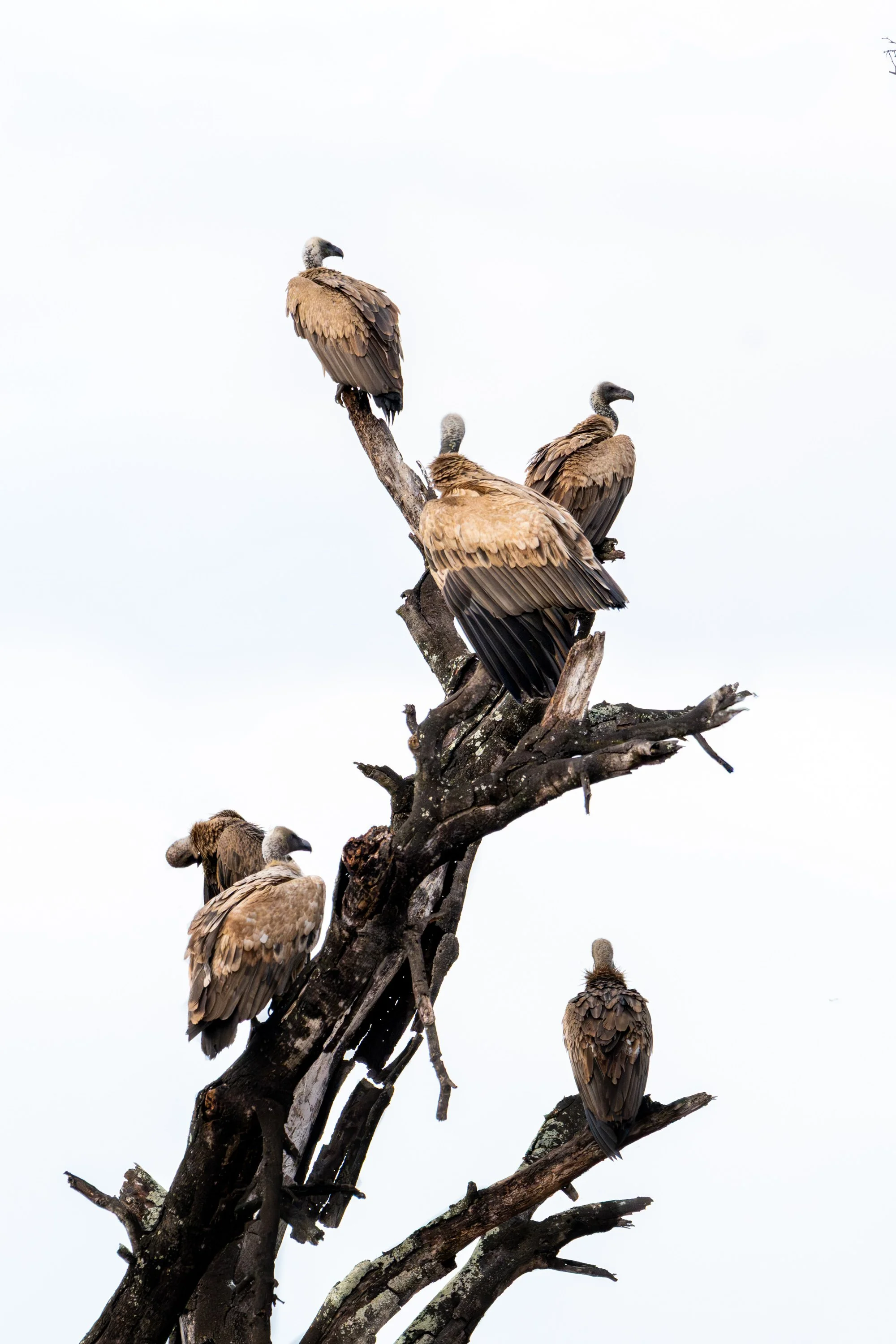
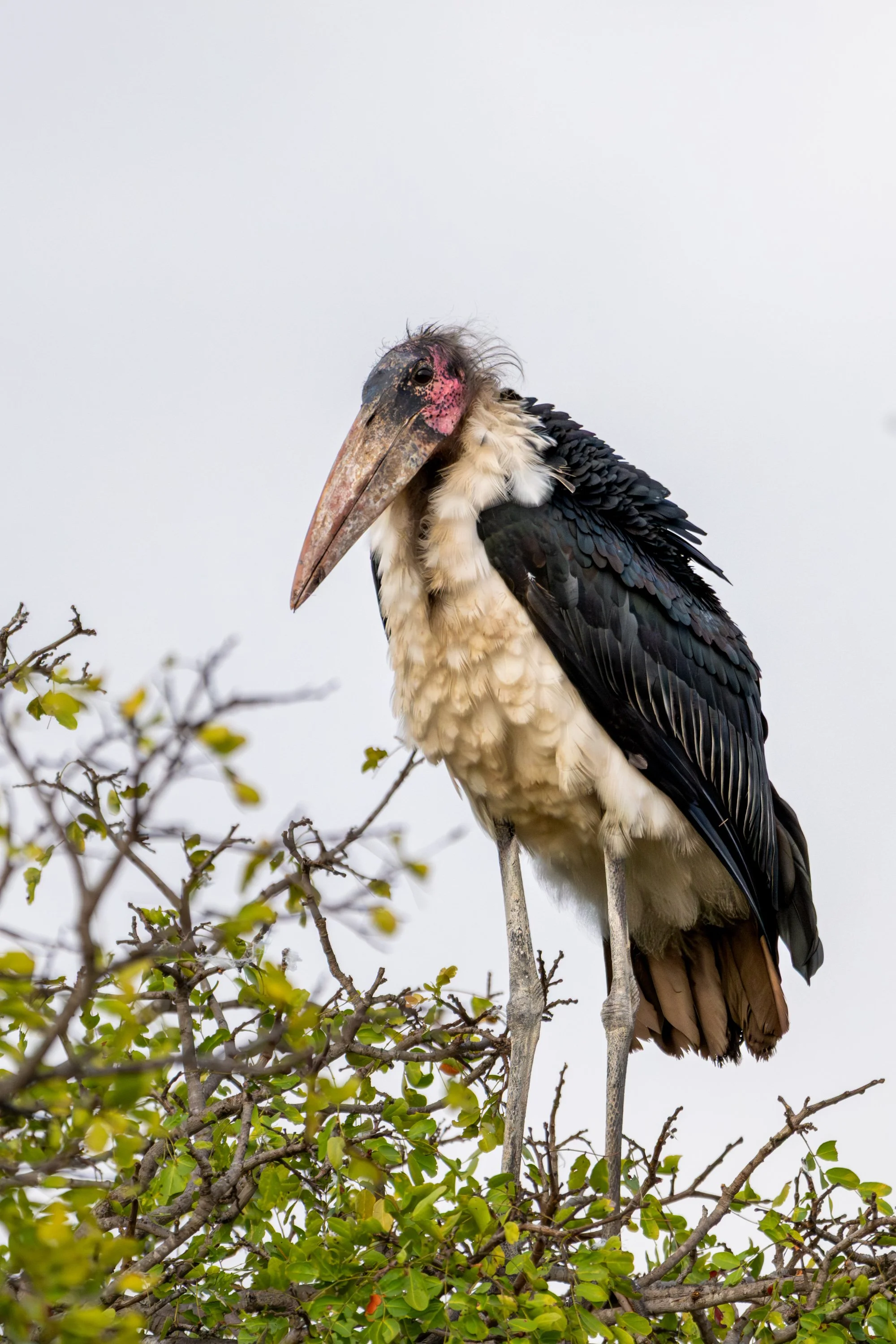
One morning, we came across that elephant carcass in a dry riverbed where the pride of lions had been camped. The lions were still feeding, and the rest of the scavengers had gathered, waiting their turn. Vultures lined the trees. Marabou storks stood just off to the side. Hundreds of them, watching, waiting.
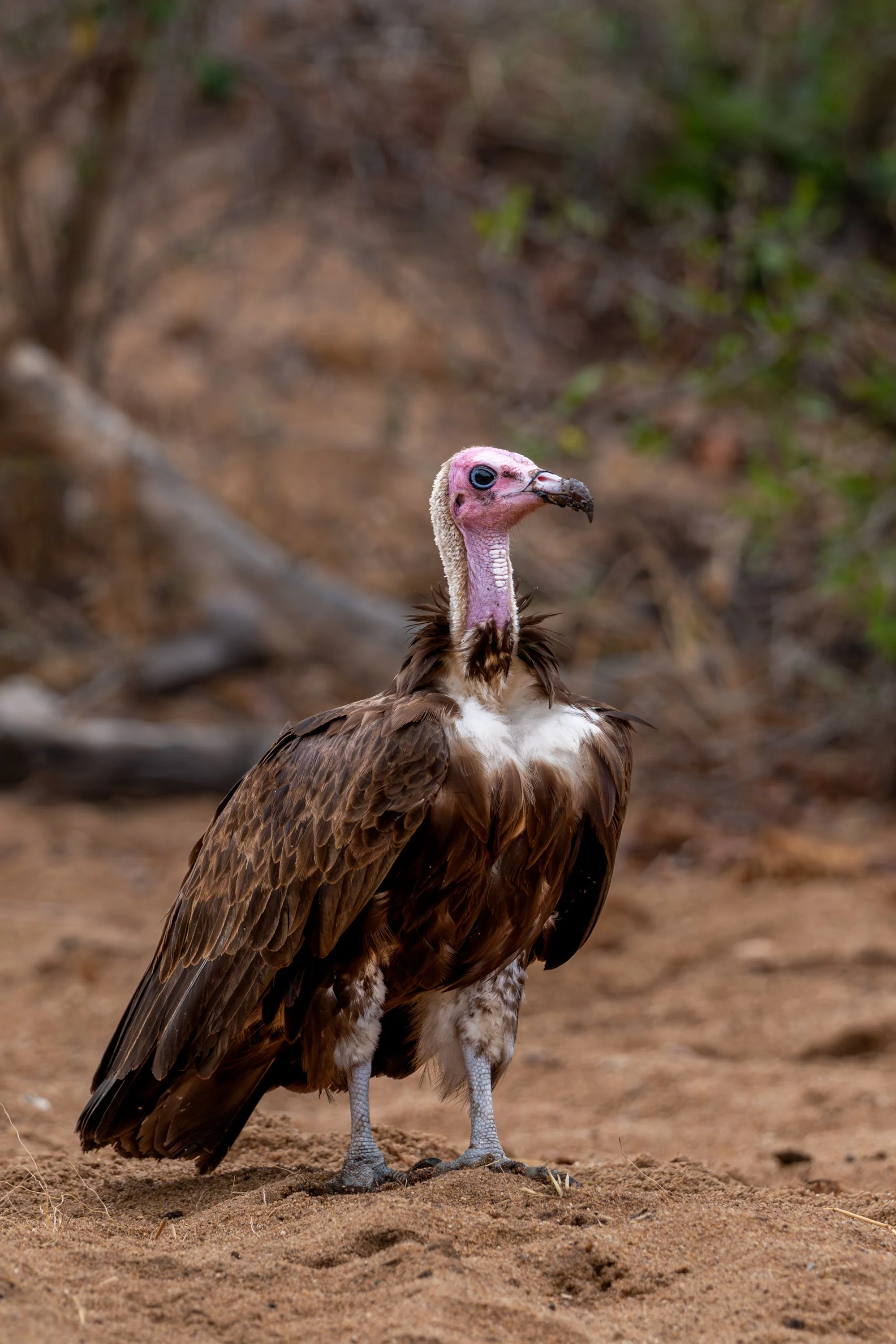
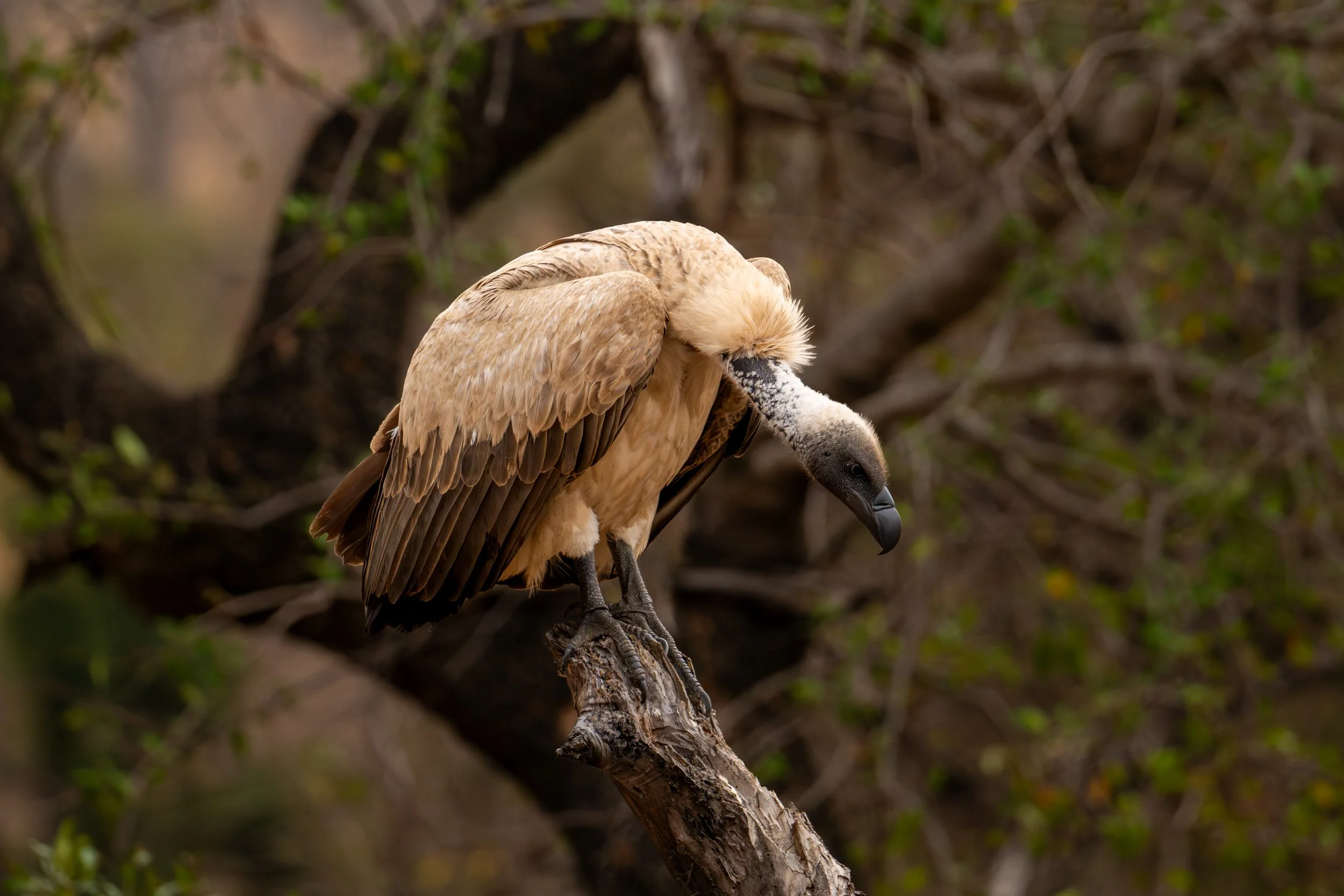
The smell hit before we saw anything. Rot and decay was thick in the air. Amplified by the Pinotage from the night before.
Interestingly, it wasn’t dramatic. It was just happening the way it always does.
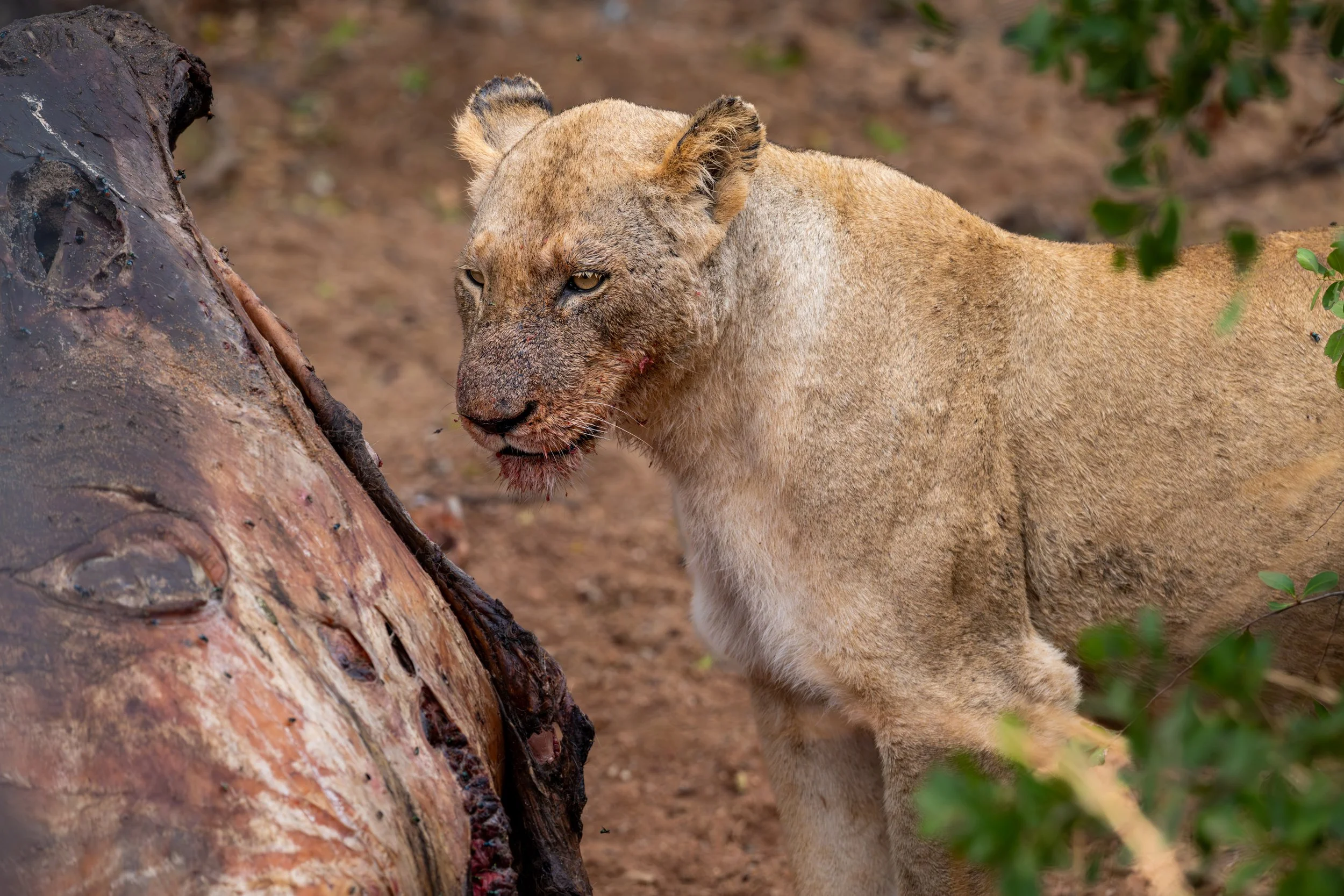
You’re not entitled to seeing anything on a game drive. You can spend hours out there and not see much, at least not in the way you expect. In a world where we’re used to getting what we want, when we want it, how we want it, this is the exact opposite. The animals are going to do whatever they’re going to do. It isn’t staged or scheduled, and it isn’t happening for us. You either happen to be in the right place at the right time, or you aren’t. When you are, and you have the opportunity to capture something unique, it matters. It’s the culmination of preparation and skill, but without being in the right place at the right time, the opportunity never arises.
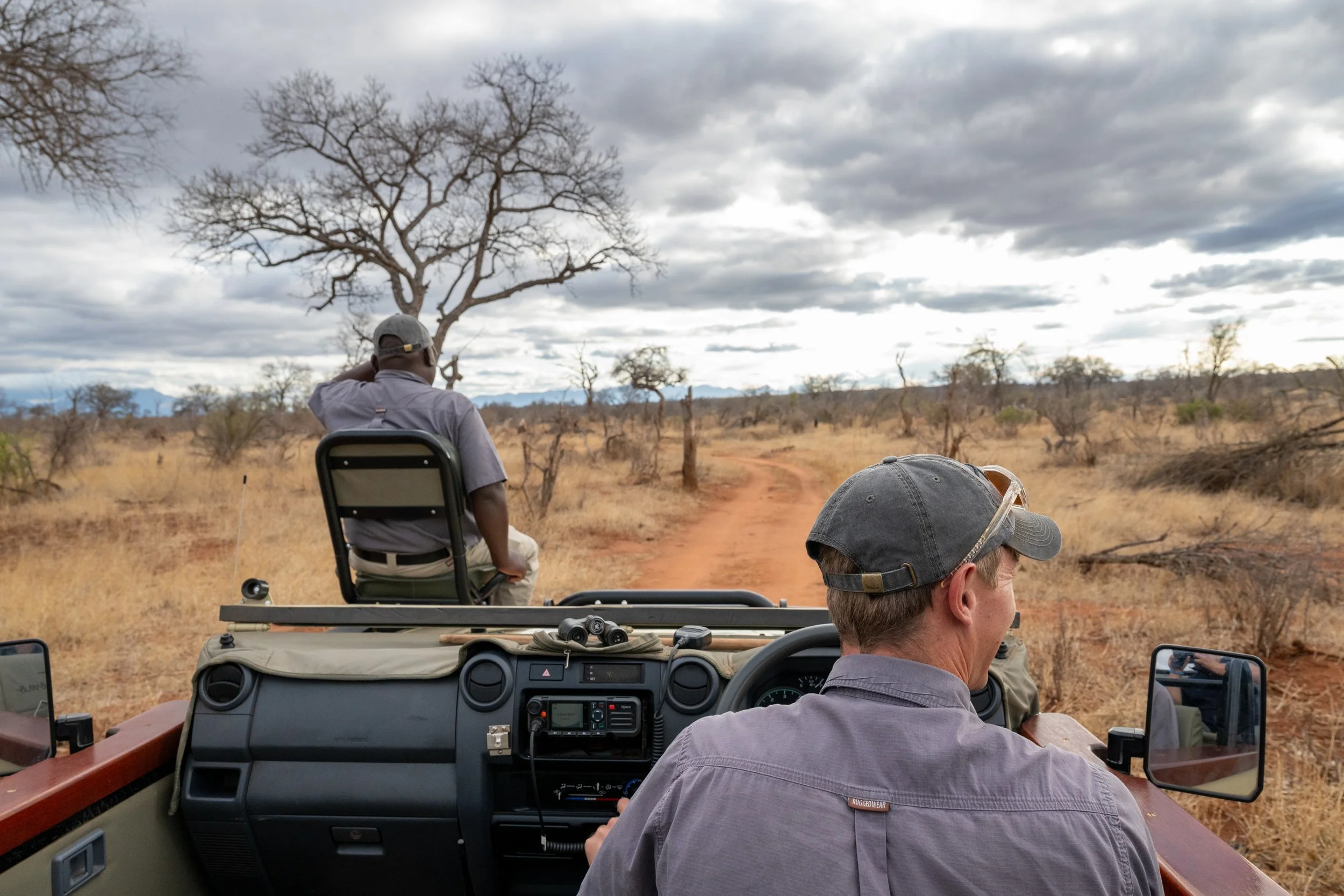
On our last evening drive, things had been quiet. We'd seen gazelle, but at that point in the trip, gazelle barely registered. The light was flat and gray, and we were winding down. Then James, our guide at Senalala, raised his binoculars toward the road ahead and said the two most exciting words we had heard the entire trip: wild dogs. My wife and I looked at each other with huge excited grins.
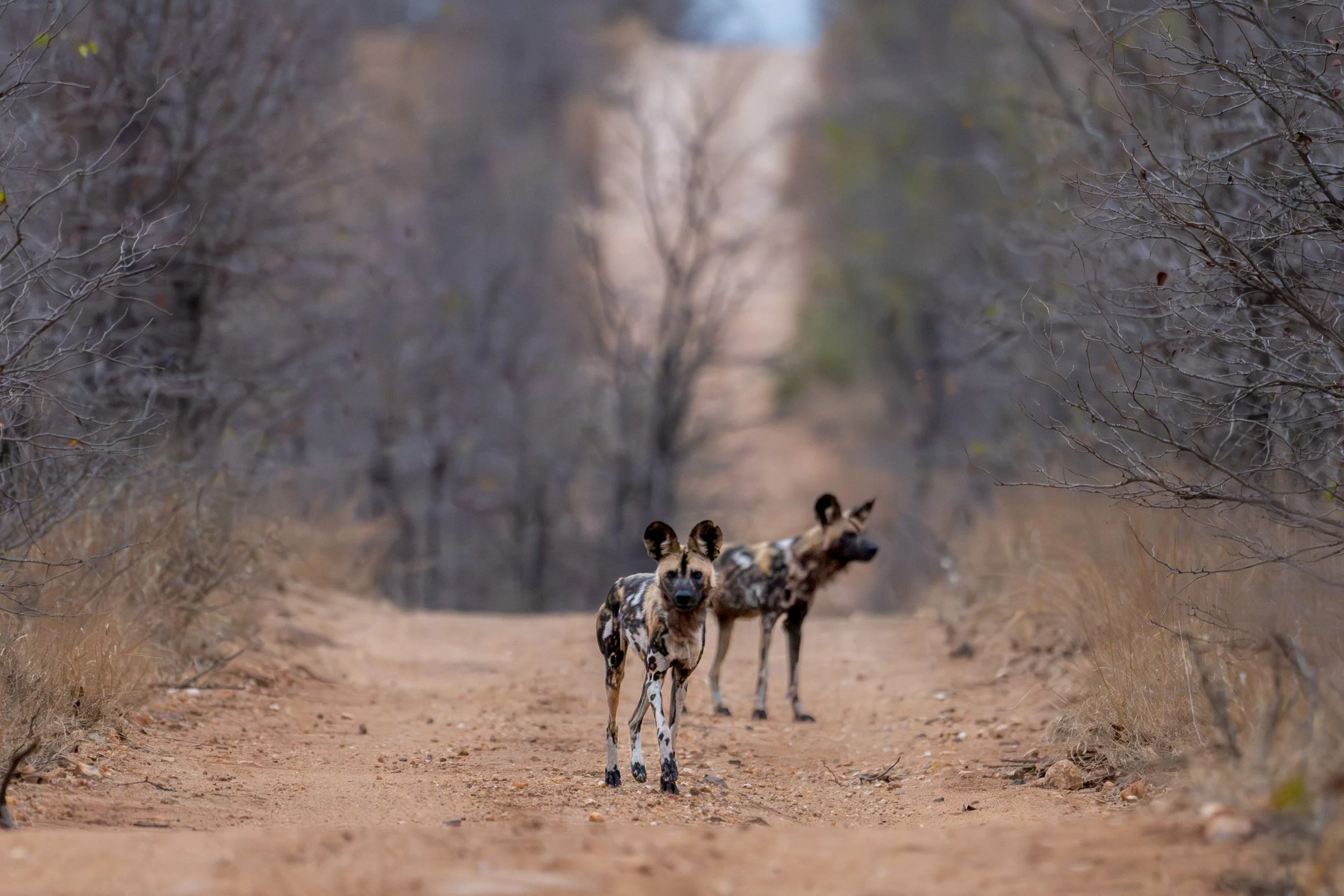
Wild dogs are among the most elusive animals in the bush. People go on safari multiple times and never see them. They are endangered, rarely spotted, and when they move, they move fast. James later said he hadn’t seen wild dogs in months. There was a pack of them crossing the road maybe a hundred meters ahead, and then they were gone into the brush. The gazelle scattered. We turned the vehicle around and sped down the road while we watched a species at high risk of extinction hunt in real time before they disappeared into terrain we couldn't follow.
James stopped, listened, and explained that wild dogs eat their prey alive. We were listening for a screaming gazelle. After a few minutes of everyone in the vehicle straining to listen as hard as we could, we moved on. Then James explained they'd look for water after a kill and pointed to a spot nearby. We set up, poured our sundowner drinks, still excited from the wild dog sighting.
My wife spotted them first. They came trotting out of the bush, blood still on their faces, and went straight for the water. We all scrambled to get everything back into the safari vehicle and followed the dogs to the water.
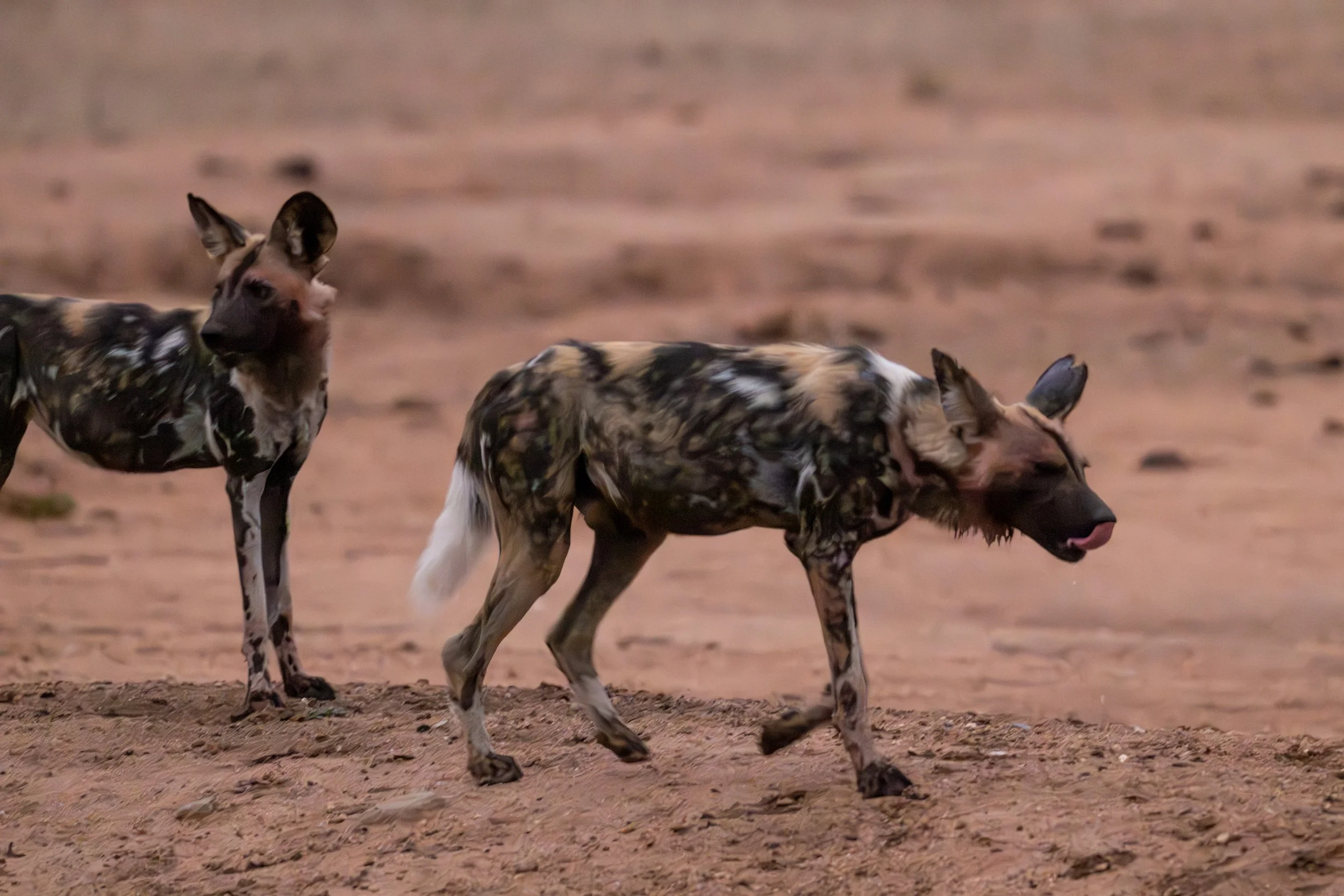
The light was nearly gone, and I had the wrong lens on my camera for this lighting. I was firing away anyways.
Not attempting to capture the moment because of failing gear and fading light wasn't an option.
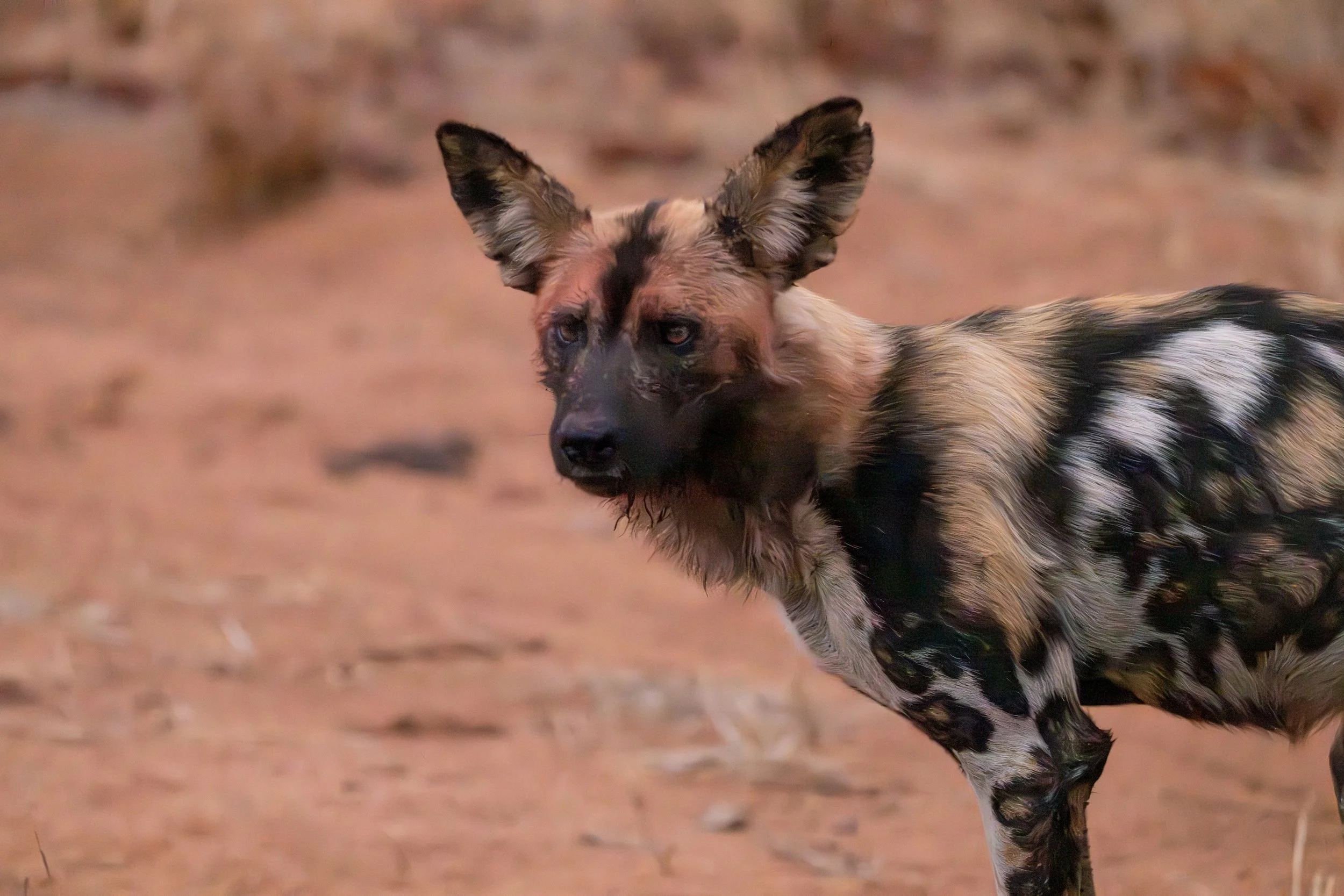
We had just witnessed a hunt, and now we were watching some of the rarest animals on the continent drink water twenty feet away, completely unbothered by our presence. The light faded, my gear struggled, and the photos aren’t fantastic. It was one of the most exhilarating experiences of my life.
Eventually I gave up on my camera and just watched the wild dogs finish up at the watering hole before they trotted off into the bush. I realized none of it was happening for us. It was already there before we arrived and it’s still happening after we leave.
Field Notes: Addendum